From Episode 03 – September 2026
Be known for what you know.
Make your expertise visible. Give the right people a reason to connect.
Cherilynn brings together decades of sales experience and daily AI practice to help women reach the table of their dreams. Her approach to LinkedIn starts with knowing what you stand for, showing up consistently and building relationships through the conversations that follow.
AI Asset: The LinkedIn Operating System
Watch the episode
Read the full transcriptLightly edited for clarity · 63-minute conversation
00:00What you’ll learn from Cherilynn Castleman
Welcome to AI Power Women. This is a show about women using AI and experience to create real leverage in their business. Today's guest is Cherilynn Castleman, a Harvard sales instructor, relationship-first sales strategist, and one of the most experienced voices I've spoken to about selling in the age of AI. Across more than 30 years in sales, leadership and coaching, Cherilynn has sold multi-million dollar solutions, led sales teams, and help women become too good to be ignored.
Today, she coaches Harvard Business School MBA students, teaches at the Harvard Division of Continuing Education, and is pursuing a mission to help 1 million women reach the table of their dreams by 2030. In today's conversation, we're going to explore the questions that transform sales conversations, the Three Rings she uses to decide what to master, learn, or simply watch in AI, and why technology can support a relationship, but it can never build trust for you. Cherilynn dropped gem after gem. Here's a glimpse of what's coming up.
01:13Coming up: trust, judgement and visibility
Sales is about helping. It's about solutioning. AI is a gateway technology. AI masters patterns.
Okay. What it can't do is it can't give you the judgment. It can't give you the feelings. Came back and says, "What is it that scares you about insurance?" She went from an 11% second appointment rate to 42% second appointment rate just by changing that question.
Only humans can build trust. Only humans can care. Only humans can have judgment. You want to be visible, not viral.
It's not about going viral. You you want to ask the questions that builds the trust. And trust is where the power is.
02:08From Girl Scout cookies to enterprise sales
Cherilynn, welcome to AI Power Women. So pleased to have you here. Thank you, Michelle. I am thrilled to be here.
I've just been so excited all week about the opportunity to continue our conversation. No. And and what an interesting conversation we're in store for today because you come with so much knowledge, so much experience as in the AI space in sales. So, I'm really excited to get stuck in with you today.
Just before we get started, I've done an intro to you already, but it'd be great for just to tell the audience where you're based and just a little bit about whatever you would like to say about yourself. Absolutely, Michelle. So, first of all, I'm based in beautiful sunny Florida in the United States and I actually have been in sales since before Girl Scout cookies were 50 cents a box. Wow.
So anybody who's in the states or knows about Girl Scout cookies, they're now almost $8 a box. So long time. I tell people, you don't have enough fingers and toes, so please stop counting. And I remember and back then you weren't supposed to be in Girl Scouts that young or selling cookies, but the community needed a leader and my mom became the leader and I kind of tagged along and and I remember pulling my wagon at the time.
You sold Girl Scout cookies door to door. You didn't take pre-orders. And I would go up and knock on the door with my smile. And I was just like, "You want to buy Girl Scout cookies?" And people of course would say yes.
And then one woman said, "Oh, they freeze so well. I'm going to get extras." And I was like, "Oh, she buys more because they freeze." So the next house I go, "Would you like to buy Girl Scout cookies?" And they're like, "Yes." And I go, "And they freeze well." And then they bought more. And then another woman said, "Oh, absolutely. And my children love them.
They make great gifts. Yeah. So, I would I would just upsell everybody and it was just natural. I had a good time and if somebody told me no, I was like, "Okay." And I'd go on to the next one.
I love it. So, I got over my fear of no. I got over my fear of cold calling. I got at a very young age, it became almost a game.
04:23Why sales is a gateway skill
And I was always a top cookie salesperson and I can't imagine doing anything else. And the other thing that I really want to tell your listeners is that anybody who needs somebody to say yes, whether it is yes from a recruiter, yes from your leadership team, yes for your idea, yes for your kids to get up and go to school in the morning is in sales. So if sales is a gateway skill and we all want somebody to say yes, why don't we master it? M.
So that's why I started coaching and training women to be too good to be ignored because I believe we're all in sales. Unless you're one rare person that never needs people to say yes, it's a very rare person. They're probably not doing anything, right? If you don't need anyone to say, you know what I love about that?
05:38Her mission: one million women by 2030
Because it makes your route into sales way more interesting than all the corporate bios that we normally read. And so thank you. And I love how you put it that we're all in sales because what I what I hear especially from female founders in particular is I'm afraid of selling or you know but you make it sound like you know it's just a natural part of helping other people. You're absolutely right. Sales is about helping. It's about solutioning.
And just to help put it in context, I went on to selling hundred million dollar SaaS solutions and leading a team of over 150 cross-sellers and upsellers and client success and business development professionals. Today I have coached and trained thousands of women in sales as well as sales teams across Fortune 500 companies and I'm an instructor and coach at Harvard's professional education, their MBA program. I'm a coach and so I I continue to amplify my voice to help women understand that sales is a gateway skill and what I've added to that is AI is a gateway technology. If you combined AI and sales, you can open any door so that you can sit at the table of your dreams.
Oh, I love that. And that's what a great gateway as well when you say you can set the table of your dreams because you when I was thinking about having our conversation, one thing that you've really got me thinking about in the leadup to this is legacy. And I love that you have this mission before you of helping a million, you know, that's a huge number, a million women sit at the table of their dreams. Tell me a bit more about that cuz I am fascinated by it.
I want to know what made you even start down this journey, how far you are along it and just share, just tell. I want to hear it all. Absolutely, Michelle. So, I was I was leading a team of sales professionals and I read an article and I'm going to begin by asking you and I'm asking your audience this.
For those that have are familiar with history in the United States, we've been measuring Fortune 500 CEOs for about 75 years. And in 75 years, how many women of color, black women, have there been in at our Fortune 500 companies in the last 75 years? There have been over 1,700 we've measured. How many have been black women at for at the highest level?
You mean at Fortune five? No. Totally. Oh.
Ever since in 75 years since we've been measuring this, how many have been black women? My goodness. Have you know what? I don't even have a starting point, so I'm just going to throw out a random number and say hundred.
How about three? Okay. And when I started my coaching practice, there was one Ursula Burns and Ursula Burns was a former CEO of Xerox. And when she stepped down, she was interviewed by Forbes magazine and they asked her why aren't there more women in the C-suite and she said women do we tend to go into law, medicine, public relations, marketing, human resource, education, health, great careers, great careers that use what we do well.
But we shy away from product and money which she went on to explain is where the juice is. Amen. And I said if I can help women understand product and money financial fluency which is all sales, can I help move more women into the C-suite? Can I help more women sit at the table of their dreams?
And so that's why I started my coaching and training practice. And so today I coach and train women to be too good to be ignored, too good to be ignored by recruiters, too good to be ignored by their leadership team so they get promoted, and too good to be more ignored by their clients so that they're meeting their quotas or building their business. And so yes, I'm on a mission to empower a million women by 2030. I'm at about 320 right now.
I just had was just featured in Forbes magazine actually last week. And so between that and a lot of things that I'm doing, I've got 53 courses that I released. I'm getting ready to release another 15 sales and AI courses. I want to amplify my voice and I'm on track and I'm sure in the next few years I'll hit that million women.
Oh, I have no doubt about it. It's it's an amazing it's an amazing mission first and foremost to help women, you know, sit at the table of their dreams. You know, I'm I'm all for what you stand for. And it's really made me think a lot about legacy and what we leave behind.
You know, we can make contributions to the world in so many different ways, but what I love about what you've done is you've already made an impact through your career, through your coaching, through, you know, training MBA students, but then you've gone on to make that impact that's potentially will live beyond you, you know, and I admire that more than more than what I have the words to express it. So, you know, thank you. You're very kind. Thank you.
I appreciate you, Michelle. Oh, well, if and thank you for giving me an opportunity to amplify my voice and having me on as your guest. Well, if this can go any small way to getting towards that million, our small contribution, you know, I'm glad to be a part of that. And so, I really want to dig into because I love the mission, but you know, obviously selling when you're the you're the founder.
11:04Selling as a founder: start with your why
So what changes when a person delivering the work is also responsible for generating the revenue? So it's so I it is again answering the why. All right. So your why for founders is very different than your why for your clients.
And so it's important that you have stories. And I think if I could tell women some of the skills to master is curiosity. Ask really good questions. Understand the pain points of your clients.
Understand the pain points of your founders and your funders so that you can answer those with great stories. So those are a couple things that I think are so critical is is being able to answer that very succinctly. I mean, just like if you ask me, why do I want to do this? I'm very succinctly say, you know, I've been in sales since before Girl Scout cookies were 50 cents a box and I'm on a mission to empower a million women by 2030 because I want them to sit at the table of their dreams.
You know, it doesn't matter if I'm saying that to a C-suite executive or somebody sitting over a cup of coffee in a coffee shop. Yeah. I say the same thing. It is my mission.
It is my northstar. Have your northstar. Be able to say it succinctly and clearly. And I think that's what's important.
12:35Build your North Star with ABT and AI
No, I totally agree with you. And for people who haven't actually sat down and thought about putting a northstar together, what would you advise them as like, you know, their first steps to thinking about that in a way that is going to commercially improve their business? Absolutely. So what I tell people to do is if we write we use a different part of our brains and we try to think about the right words and it gets lost. So I always tell people open a word document in the top right hand corner you'll see a little microphone that says dictate.
Hit dictate and just answer these three questions and just talk. Don't worry about the right words just talk. Let your passion come out. Why me?
Okay. Why you Michelle? What makes you different than anybody else? Why me?
And talk about your superpowers and what do you bring to the table that makes you different and talk about how you were raised and what inspires you and what gets you up in the morning and just talk about why you until you've exhausted it. The next one is why this product or solution, why this tool, why this solution, why this platform, why this software and talk about why you created it and what problems you hope to solve and that you're and and again until you've exhausted that. And the third one that's most important is why now. Right now, this snapshot in time, given everything that's going on with technology, politically, culturally, globally, take all that into consideration and answer the question, why now?
I mean, take that tool, drop it in, take that narrative just like it is. Don't don't fix the punctuation, the runon, the misspelled, nothing. Just save it as my narrative, my why. Drop it into your favorite AI tool and ask it three questions.
The first one say what are the common themes here? What are the insights? The second one is what am I missing? What did I forget?
What didn't I think about? What you know what else should I be addressing? And the third one is ask it to summarize it into a strong ABT statement which is your and but therefore which is your truth, the problem statement and the solution. With a strong hook and then and I always tell people do multiple iterations.
Make this for so is that an eighth grader can read it and make this for a CEO. Make this technical for somebody in my industry who's a CTO. Make this for a CFO and make it financial. Reiterate this statement so that you have multiple.
Then take your favorite and practice it till it rolls off your tongue. Yeah. The way your name does. So that I can say over and over again.
I'm Cherilynn been in sales since before Girl Scout cookies are 50 cents a box and I'm on a mission to empower a million women. I wake up every morning and say it. I say it all day long. You want to be able to do that.
So again, it's your ABT statement. And, but, therefore, and is your truth, but is a problem. Therefore is a solution. Your AI tool will write that for you.
It can make it can it can tighten it down to 15 seconds. It can make it six minutes, 15 minutes. Every great aator that I know used it. Martin Luther King, Oprah, LeBron James, they all if you look at their speeches, they're all under that format.
And you have this incredible thing called AI that will help you tighten it up and you won't have to spend thousands of dollars for a speech coach. Love it. You've got me there taking notes. I've got pen and papers, ladies.
Pen and papers. Deal. And and the other thing and the other thing is I I will share lots of frameworks with you. If you connect with me on LinkedIn and just ask me for them, I promise I will send it to you.
And so connect with me on on LinkedIn. I'm connect with me on LinkedIn, not Facebook notes below. So you'll be able to find all of Cherilynn's links, be able to connect with her directly. Connect with me on LinkedIn and ask me for any of the frameworks that I talk about.
16:25The questions that build instant trust
Perfect. Perfect. But I love the ABT. I'm going to be using that.
And so you I know relationship first selling is your thing. This is what you're known for. Tell me a little bit more about your approach. You describe your approach as relationship first selling.
What does that mean when you What does that mean for women who still have like a revenue target to hit? [laughter] So one of the things that AI can do for you is it can AI masters patterns. Okay. So you can take someone's LinkedIn profile and you can take their their their financial documents and their filings and everything and and their marketing plan and pull it into AI and AI can pull it together and give you this great insight.
What it can't do is it can't give you the judgment. It can't give you the feelings. And that's something that you we have to do. And so one of my favorite techniques that I tell people to do is take your favorite questions, the ones that you ask out of curiosity and drop them into AI and ask AI to turn them into high quality connection questions.
Now, this comes from Dr. Jane Dutton at the University of Michigan here in the United States. And what she says is that you can ask questions that make people feel make that make people feel connected to you. Remember that everybody wants to be seen, heard, and understood.
So if you're asking people questions that you already have the answers to, that you could easily have found out on the internet somewhere, they feel like it's an interrogation. Yeah. So one example is one of my clients was in she was in financial services and she used to ask people tell me about your insurance and so people talk about the types of insurance they have. Well when I asked her to put it in AI and ask it to rewrite it as a high quality connection question it came back and says what is it that scares you about AI insurance?
M she went from an 11% second appointment rate to 42% second appointment rate just by changing that question. Wow. I had another client. She was a career coach and she used to ask women where do you want to be 3 to 5 years from now?
We all know that answer. No emotion tied to it. This is my goal. Instead AI said ask your women clients when was the last time you cried at work.
Oh. Oh. Now, she went to almost a 90% you know, conversion because if you ask a woman, when was the last time she cried at work? That's the real reason why she needs a coach.
It's not where she wants to be 5 years from now. It's what she's struggling with today. 100%. And so, take your favorite questions, ask it to rewrite it.
Even if you just try one question, open with the first question that differentiates you from everybody else and gets people talking about their feelings. And then here's the big hardest thing for salespeople. You're focused on your quota. I want you to be quiet.
When that client starts talking, allow four seconds of silence when they stop. They're going to talk and then they're going to stop talking. And don't jump in. Just in your mind go 101, 10,0002, 10,0003 and 104.
I promise you they will step into that silence and they will tell you the rest of the story. And that's where the magic happens. Wow, I love that. And if not, three things you can say.
Tell me more and then be quiet. Yeah. How do you mean? And be quiet.
Or my favorite question. And somebody's talking. There's silence. Just say, "And watch what happens." Because they feel the need to fill in the blanks.
20:40The Three Rings: Master, Learn or Watch
I'm guessing they will fill in the blanks and they will speak from their heart and they will speak with passion and they will feel seen, heard and understood. And once you connect with a client that way, you have a client for life. They may not buy today, they may not need today, but I promise you when they do, you'll be the first person they call. Wow. This is absolute masterclass. We're getting a sales masterass.
I love it. So, you've said the word AI a few times in this conversation. So I really want us to swivel a little bit like stay in the same track. But you mentioned AI fluency and you know what I want to know that you talk about you know deciding what we need to master was your was what you said and what we need to lead on and what we're allowed to ignore.
So how should a founder kind of make that decision? Okay. So what I talk about is there are Three Rings when you're talking about AI and so many of us when we say AI we just lump it all together and so first of all I want to differentiate so when I talk about AI I think that there is automation AI that's making that does things by itself the next one is augmentation this is AI that's making things better it is amplifying us it's elevating us and then the final one is agentic AI this is that AI that runs by itself. So what I challenge people to do is and this is I mean I was reading in the Atlantic yesterday and there's this new soft there's this new AI tool out that you give it to your credit card and your and all of your access to your email and it will go out and book hotel reservations for you airline reservations for you.
And I was started I'll be honest I was going oh my goodness oh my goodness I'm not using that tool I don't know how to use that tool. Do I really want to use that tool? And then I stopped and I went back to my rule. My rule is every single time you read about a new AI tool, a new AI solution, stop and say, "Is this something I need to master for my my business, my career, just personally?
Is this something I need to master?" And I said, "No, I don't need to master that right now. Is this a tool I need to learn right now? Is this something that I need to learn and get involved in?" and I decided, no, I don't need an AI tool right now with my credit card out there. Not something that I needed right now.
And the final one, is this something I need to watch? Absolutely, I need to watch it. So, I have three buckets. And every time I hear about a tool or I read about a new solution, before you get anxious, just stop and put it in one of those Three Rings.
It is okay to watch. And watch means that every time I see an article about or I read about it, I read about it and throw it in the watch file. If it's something that I need to learn, then I actually schedule it in so that I can learn it. And if it's something that I master, I'm working on it every day until I master it.
And so trust yourself. Give yourself permission to say, "I don't have to learn it all." We were never intended to learn it all. The last time I counted between sales and go to market tools, there are over a hundred new tools coming out every single day. You can't learn them all.
You can't master them all. I'm giving you permission to put some in the watch bucket. Yes. I tell women that automation and augmentation are you must master.
Okay? You must master at some level how to use AI to get to make you better and to make your life more efficient. Agentic AI. There are so many tools out there.
We should be building bots and agents. That's agentic AI. The third one is I think that agentto agent commerce where agent is your agent's buying from their agent. Your agent is your RFP agent is talking their RFP agent.
It's for me that's a watch. Yes. And so that's what I tell people and my clients to do. I was talking to a woman at a conference this weekend and she walked up to me and the tears just started flowing and I felt so bad for her.
She's a brilliant entrepreneur. She's developed this platform and she's like, "It's just coming at me so fast, Cherilynn. I don't know what to do." And I get overwhelmed and I just I touched her arm and I said, "Three rings." Yeah. And when I got done, she was like, "Why didn't somebody tell me that?" She goes, "I can do this." Yes.
And she was like, she grew two inches, all of a sudden, she was like, "I can do this." I love it because you simp and the brain can only cope with simple strategies and frameworks. Once it's simplified, it's almost like it takes all of the cognitive load of us and we're like, "Uh-can understand this. So I can compartmentalize what the all of this large thing I need to do into these three buckets or the Three Rings as you call them. So I love that.
I I think it's I think it's beautiful the way you the way you've done it and it's also something I understand that you're going to make available to the audience as well. Absolutely. So the Three Rings is available to the audience through your platform. It talks about the Three Rings, how to imp apply them and I've made it very simple.
So is that if you and the other thing I talk about is one thing when you listen to a podcast, when you read a book, one thing I want you to learn one thing that you're going to do starting tomorrow immediately and this is one thing. So, you know, join Michelle's platform and take this one thing from my podcast today is the Three Rings and I break it down very simply for you and provide all the information that you need.
26:24AI usage versus genuine AI fluency
Amazing. Amazing. And I've tried it guys use the, you know, use the Three Rings. It's really super helpful.
So I want to ask another question around AI is what separates someone who uses AI frequently from someone who is genuinely AI fluent. So [laughter] so it actually for you today. No no it's it's okay Michelle I chuckle because it reminds me of when I was practicing piano. Okay.
I was I was a horrible piano practicer and I never [clears throat] practiced and so I' I' I'd come to my lesson and I'd play da you know that and I'd hit the wrong note and da da and hit the wrong note and so there's a difference between practice and perfect practice and I was practicing and I'd hit the wrong note over and over again week after week after week and so if you're using AI to write emails and you're not reading the emails and you're sending out emails that may have incorrect data because AI will hallucinate AI doesn't care how hard it took you to build that relationship. AI will give you information that may be inaccurate. And I've gotten emails from people that had inaccurate data. You know, and so people don't read it.
And and so what I tell people is it's not using it, it is mastering it. And what I challenge people to do is spend 15 minutes every morning improving your skills. Go from prompting to writing briefs. When you write a brief, you're you're you're you're building out your AI tools for you so that you can use that brief every single time.
When I teach, I have a brief called Cherilynn's instructor philosophy. It's about 18 pages long. And before I teach a new course or even before I teach, even before I came on this podcast, anything I'm going to do, I bring that brief in so is that how I'm building out what I'm going to talk about. AI already knows here's 18 pages of what's important to Cherilynn, her mission, how she teaches, what concepts, what framework she uses.
When I write an email, I have about a an 11page brief that I always start with when I'm gonna write a communication. So it's it knows very clearly that I don't use African-American vernacular because the first time AI wrote yo sis, I thought it was going to scream. And and and if I don't tell it that I don't use African-American vernacular, it doesn't know that. Yes, of course.
And so and so move from prompting to writing briefs. And so ask AI every morning say this is what I'm working on. I want to get better. I want to get better.
Start you know move from clawed chats to workflows. There's so many there's so many things to progress and I think everybody is different. So I'm I'm not I'm just if I could tell you one thing. Yeah.
Spend 15 minutes every day. If you're a lark and you get up in the morning, do it in the morning. Yeah. If you're a night owl, do it at night.
Do it when your brain is sharpest. Yeah. 15 minutes a day, not doing the same thing. Yeah.
But doing being curious, asking, "What else can I do better? What am I missing? What else should I be learning?" Love that. And I love that you brought up briefs because this is where you and I thousand% agree.
I you know I also have a framework around briefs as well but you know our frameworks are similar but different but I the premise of it is the same in the sense it's about AI literacy you know and as you said the AI can hallucinate and I also find that what happens with people is they go into a conversation like my way of describing it is like a messy WhatsApp chat and they going back and forth but what you're suggesting when you have a brief is that you actually stop a second, take some time to think up front and plan out almost use it like you're hiring someone. You know, it's someone you're hiring for yourself and give it a scope of work that brief and then it stops the AI from filling in blanks cuz yes, it hallucinates. We know that it can get things wrong, but often we just didn't we didn't give it enough context and so it makes it up for us and then we're like, "This is totally wrong." Whoa. Didn't really give it much to work with.
Yes. And and I love what you said and I'm going to I'm going to take it one step further. Imagine that you had a new team member on your team. Would you ever tell that team member, "Go write an email and send it to your most important client." No.
No way. You would say, "Here's an example of emails we've written. Here's our product information. Here are our key words.
Here's things we say and we don't say." And so I always tell people, treat AI like your most important new employee and brief it just like you would one of your team members who was brand new. And and so I've had so many people just say, "Oh, write an email to this person." And and then they're like, "Oh, AI doesn't work for me." And I was like, "You have to brief it." And and the and the thing that I tell people that saves you time is write the brief. And the other thing is that if you are using AI to do a workflow for you, ask it to write the brief before you start. So I will dictate this is what I'm trying to do.
32:07AI as a prep, practice and feedback partner
Write the brief and include everything that I missed and that I should include and ask me the questions that I should I should answer. So I get my 10, 12, 18 page brief before I start on a project. I love it. And I love that you know you use AI as a as a prep a prep partner like a practice partner and it gives you feedback. Can you kind of take us through those kind of those kind of three jobs like what how does that show up in your in your world?
AI is a prep partner, AI is a practice partner and AI is a feedback partner. So I have so I have a thinking partner. This is somebody that I do strategy with positioning. I will sit down with my tool and I will say, "Okay, I'm on a mission to empower a million women.
What am I missing?" Or, "This person came to me seeking partnership. Does this align with my mission? What am I missing? Should I?" And and then it starts asking me questions and then I was like, "Oh, yeah, no, this doesn't.
Oh, yes, this does. This is what I want to do." the other one is I have another tool that I use for halfbaked ideas. Okay? It gives me clarity.
Is where I can go in and just say, you know, I was wondering about starting my own podcast. Okay. And and so it's just a halfbaked idea. Or somebody the other day said, oh, Charlene, you should write a book.
Never written a book. And I was like, I want to write another book that, you know, and it just it doesn't it doesn't bring all my strategy in because it's not where I do my strategy. It's just it's just a chance for me to kind of sharpen out my halfbaked ideas before I take them and strategically start looking at them and implementing them and building them out. Then I have I use a tool where I do course development and unpublished works.
I want to protect my intellectual property. I want to be able to think about frameworks when I'm building them, speeches I'm going to give, presentations, keynotes, and so I want something on my desktop. And so I have an AI tool that I use just on my desktop for this. Now once they're built, then yes, I post them on LinkedIn.
I speak about them. So when I was first working on my Three Rings, that sat on my desktop. I didn't want anybody looking at it. Now that it's built out and it's framed, it's everywhere.
I teach it at Harvard. I posted on it on LinkedIn. I'm charing it on with your platform. And so I think it's important that you know what the tools are and you don't confuse them.
There are tools for CRM. Don't ask it to write emails. Okay. There are tools for strategy that are great thinking partners.
Don't expect it to be your CRM. Exactly. There are tools that my father-in-law is getting ready to have his 80th birthday party and I thought it would be cool. Not everybody can come.
He's got over 40 grandchildren. Again, I'm great grandchildren. If I could bring all the photos together and I went and got an AI tool that's just for photo that does that. And so if you know, find the right tool.
That's so important because when you use the wrong tool, you're going to get the wrong answer. Yeah. So true. So true.
35:23Cherilynn’s AI toolkit
Talking of tools, do you have a tech stack? You know, do in your daytoday, have you got your favorite go-to tools that you're like these, I use these daily, you know, no matter what, I need these ones. What's your top three? So, Claude is my thinking partner. Okay.
Okay. I use Claude both as my thinking partner in the chat as well as the workflow. And so I will say I' I've I've written 53 courses and now I want to write I want to do 53 videos, help me develop 53 videos to go with this. So I've done the content, I've done the handouts, I've done the slides, I've done everything, but I want a 30 second avatar video to go with it.
So I can ask Claude to write those for me. That's part of what I do. I use ChatGPT as my idea thinker. Okay, that's all I use it for.
I can jump into ChatGPT on my phone, on my desktop, anywhere I am. If I'm out walking and I get an idea and I was like, I'm thinking, "Oh, wow. I just I saw bamboo and bamboo grows so strong and straight. I wonder if I could write a a LinkedIn something about that." And I just throw it in there and so it's it's where I build my ideas.
And then I use Notebook LLM. Okay. For notebook LM for my proprietary information. So, those are three tools that I use every day.
I don't let them be interchangeable. The only one that has access to some of my folders is Claude. But I think guard rails are so important. Every single time I hear about somebody saying, "Oh, AI went rogue and AI did this." And I said, "No, the user didn't put the guardrails in place.
You have to put the guardrails in place." And so when I was thinking about this tool that people are using now to let AI give their AI their credit card, they're talking about AI is booking reservations at find restaurants that have $200 cancellation fees or find hotels and they're getting hit with $250, $300 cancellation fees because AI is figuring out what is a priority on their calendar. And so the person, one of the the author of the article said, "I came up with a virtual credit card, a fake an, you know, an aka a fake profile, a fake email to see how it worked." Yeah. And as soon as I was done writing the article, I deleted everything. Yeah.
37:47Guardrails, privacy and human judgement
And so that's why for me, it's a watch. I don't I'm not writing articles about that. I don't need to. I can just watch what's happening with that. Yeah.
Exactly. And so Yeah. And so I I think we have to put guard raws and that's why I put you know my halfbaked ideas in ChatGPT and those are the guardrails I sit there ChatGPT does not have access to my emails to you know to anything. It is just those ideas.
And so I think that's that's what's important. You know what? I I wholeheartly agree with you and I think it raises an interesting question around what we allow these you know these AI tools to do and where the line is between the tool and its capability but also the human judgment. Do you have a you know in yourself like a cut off point where it's like you've obviously described it with those tools but just generally do you if you were to advise somebody where would you say I let it go this far and then here's the cut off or what do you recommend other people how they should interact with it in terms of judgment and guard rails.
So, so I ask people is this is this data that I'm asking you to assess patterns and data and information or is this is this what only humans can do? Only humans can build trust. Only humans can care, only humans can have judgment. And I know there's some people who disagree with me.
What but when it gets to that point, that's where it is. Yes. And so I can I can draft my first draft of an email and then pull in the LinkedIn profile and the and the company's information and AI will tell me, "Oh, this CEO is really interested in innovation and I miss that." And so we reframe the email about innovation. But when it comes when they when it says, "Oh, and we found out that you know his son goes to this school and his daughter's doing this and they include it in the email." That's personal.
That's judgment. I get to decide. AI doesn't get to decide. And so I think when it comes down to building a relationship and treating people the way you want to be treated, that's where the judgment comes in, where the feelings come in.
It's not I don't I'm not writing questions to make to hurt people. I'm not writing questions. I I want to connect with people. Yeah.
And we have forgotten the art of connecting with people and building trust. AI will never build trust. Yes, I agree with you. It's it doesn't have the empathy to be able to do it.
It can manufacture it in a synthetic way and it looks good, but you it doesn't it's almost like it doesn't get to the heart of it. And you know when someone else's that you know that human has put there, but it doesn't have a heart. So it can't get to the heart of it. I mean, think I mean, think about it.
So, if it's it's I mean, and I've not thought this through. But it's like the head and the heart. If it's leading with your heart, then you have to do it. If it's leading with the head, that AI can do it.
But as soon as it's about the heart, it's empathy, it's judgment, it's kindness, it's caring, you have to do that. Yeah. And and when I say people want to be seen, heard, and understood, they want to be seen, heard, and understood by another person. Yeah, they do not want to be seen, heard, and understood by an AI tool.
100% agree. I really do. And and I and the other thing is that I don't think people object to AI when you tell them what it is. I've started when I do my posts on LinkedIn now, I have a footnote on the bottom that says drafted by me at 4 a.m.
Polished by AI and the creative is AI. Okay? I tell everybody straight up, this is my idea. This is my framework.
This is my post. I wrote it. Instead of me taking three hours, polishing it, which is what I used to do, I now let AI polish it. And I let AI do the creative sometimes.
Sometimes I do them in Canva. But if I let AI build it, I say that right there in the footer. And my avatar videos, I say that. I say, "These are my frameworks, and this is Cherilynn's avatar who's going to teach it to you." And I tell them why.
Yeah. People don't object. If if AI is writing your emails, I will I put at the bottom. This is written by my AI avatar.
Because I wanted to get something to you quickly. Yes. Period. Love that.
I love the transparency and I think not a lot of people think about just be open about it. It's here. It's part of our everyday world now. Let's let's human and AI work together.
It does help us move faster with things, but like you say, there are some human side of things that you should protect. Say where it starts and ends. I really like that approach. Really really like that approach.
42:42When to be transparent about using AI
Thank you. I haven't heard anybody say it like say it like that before. I just there's there's so much what they were saying by 2028 one quarter of every LinkedIn profile will be AI generated not a real person and so this is impacting recruiters and so [snorts] so much a there's so much AI videos and posts on social platforms and so I was the other day I wrote an article which I haven't posted yet, that says when there's so much dirty water, clean fresh water becomes more valuable. Yes. So, how do you make sure that what you're posting is clean and fresh and that's what the value is?
Because so much of what's being written and posted by these AI tools is not fresh. It is not clean. And so, that's what and so that's what I tell people is just be honest, be transparent. That makes yours clean and fresh and more valuable.
43:42LinkedIn: be visible, not viral
Love it. And you mentioned LinkedIn. So, and I know that LinkedIn is an area where one, you're a top voice around LinkedIn anyway. So, where does LinkedIn fit into the system in terms of AI expertise and how you turn it into visibility?
Because I know that's a an area you've used AI to help women become more visible on LinkedIn. Absolutely. So, in full transparency when I started oh goodness 2019 I struggled because I was anxious and for me posting on LinkedIn back then was almost like you know that nightmare you have where somebody's chasing you with a knife and that scream so not the knife but that scream that fear and I'd post and I'd be like and so I realized that I don't carry business cards today. I don't know if you have a business card.
Nobody has business cards. Your business card is LinkedIn. Yes. So, if that's the case, it should answer your why.
It should have a great professional headsh shot. It should have a header. It should have your tagline in the in the banner. And your about section should say, "I want to meet you." When somebody reads it, they're like, "I can't read wait to read Miss meet Michelle." Yeah.
And so if your LinkedIn doesn't do that, then my challenge for you is to go out and change your LinkedIn profile. And I'm going to say one of my mentors, Bill Green, the former CEO of Accenture, said to me, when you criticize people, you raise their defensiveness. But when you challenge people, you raise their game. So I'm going to challenge your listeners.
And that's what I'm known for is I'm going to challenge you. LinkedIn is your business card. Make sure it's putting it your best foot forward. Yeah.
And I know that we've included that as one of the tools that's available. Leverage what it's and create a LinkedIn profile that makes you too good to be ignored. You know what? Challenge accepted because my LinkedIn does need some work.
You know, it's one of those things that you know you need to take care of. I post and everything and I haven't updated it for a little while. So, I am gonna go back through and raise my game. Okay.
And and the easiest way is to write a LinkedIn brief. Yeah. Okay. Dictate how what you want.
I've given I know I've given you some tools that are available through your platform to do that. And then take your LinkedIn profile and let AI help you create a profile that is too good to be ignored. Make sure you use the microphone and pronounce your name. People want just like they want to be seen, heard, and understood.
They they want to see you. Let them hear how you use. If nothing else, just, "Hi, I'm Cherilynn Castleman." People feel connected to you. So, make sure you use that little tool.
That your banner is that white space that they give you. Use that for your header, your tagline. Mine very clearly says, "I'm on a mission to empower a million women to be too good to be ignored." that is right there on my banner. Your about section, it's not your resume.
It is your value proposition. What can you do to create value for people? Yeah. And your about section should read like a story that somebody when they read it says, "Oh my goodness, I want to meet that woman." Oh, I love it.
Like I said, Helen accepted and heard other people. Now, one final thing. Yes. If you are afraid like I was and so many of us are, I want you to think about walking in the park.
Okay. Michelle, do you go for a walk in the park? I do. Okay.
And so when you're walking in the park and you come up across people and you nod at them and smile, they can do one of three things. What's one thing that somebody will do when you nod and smile at them? Smile back. Nod back.
Say hello. They might smile or nod back. They might ignore you. Or they might engage you.
Yeah. Think of LinkedIn as a walk in the park. You put up a post, some people are going to ignore it, some people might like it, and other people might comment and engage. What do you do if you're walking in the park, regardless of what somebody does, what do you do after they've done that?
You carry on with your you keep walking. [laughter] You're absolutely right. And so I tell people, post the next day. I've put up posts and had close to 100,000 engagements.
And I've put up posts and had zero. I've put up post and four or five people engage it. Yes. Do you know what I do the next day?
I post again. So, come up with three topics. Post to your community. You want to be visible, not viral.
It's not about going viral. You don't need a 100,000 people. You just need to be visible to your community. Come up with three topics.
Post about those three topics repeatedly. That's how the algorithm works today. It's about what you're posting about. It's about people who want to read about what you're posting about.
And look at it as a walk in the park. If it works, it works. If it doesn't work, it doesn't work. Just keep posting and have a good time with it.
Yes, you do. And you do get over the initial fear because I remember the first time I started posting and I I just kept checking it. You know, it's almost like you become addicted to it. Now I post that, you know, I post I get into the comments to respond, but you but you got to move on with your day.
You cannot right and it does leave you once the initial fear has dissipated and it just become it does a pop and you Yeah. And you made you made a good point. Always comment reply to every single comment that you get. I encourage people to usually do it within that hour.
So I post 9:00 a.m. Eastern time. Your local time is the best time to post. And try to make sure you're available between 9 and 10 to comment.
Reply to people who engage your posts while you're on there. Go out and engage your followers. Go out and engage people that you care about. And spend an hour engaging, commenting, re-sharing, and always reply to people who comment to you.
And not just thank you. Give them a comment. Tell them tell them what you appreciate about their their insight or what they shared. And it becomes just it just becomes another tool in building your business and becoming too good to be ignored.
50:05Your first 5 moves to sell with AI
I love that. I love that. So, putting it putting it all into practice. So, if a founder watching this wanted to become better at selling and and at selling with AI [laughter] over the next seven days, what would you have her do? What would you have her do? Day one, two, what how would you break that down for her?
Wow. Okay. You asked good questions. Okay.
[laughter] Thank you. So, the first thing I the very first thing I would do is I would build I would answer my questions, my why. All right. I would do that exercise and build your ABT statement because you're going to use it on your LinkedIn.
You will use it on your website. You will use it if somebody writes to you or a client because once you start on LinkedIn and people start asking you questions, you got to have those why. So the very first thing I would do on day one would be build out your why. Yeah.
On day two, I would start the habit of 15 minutes every morning. Take your curiosity, use your thinking partner. You're going to come up with ideas. Now, I say morning because I'm a lark.
I'm up at 4:00 a.m. Every morning. If you're a night owl, do it at midnight. I don't care when you do it.
Do it once a day. But spend 15 minutes with curiosity. And curiosity is just that childlike I want to know. I want to know more about this.
This is what I was thinking. And so you're going to get ideas and so move forward with them. I would implement one thing. Yes.
And on day three, I would start implementing one thing every single day. Do one thing every day. I'm doing one thing to move me in the direction of you know a million women. Yes.
I think that's so important. I on day four I would come up with a LinkedIn strategy. I think that I have clients I have Fortune 500 clients, Fortune 100 clients, and all of my clients came in through LinkedIn. M and so I would come up with out DM messages, how you can DM messages, let's connect, doing information interviews, meeting with and talking with your community to find out what their pain is, what their needed, what they're interested in.
And I would build out a LinkedIn strategy for 90 days at AI help you do that. And then I would start a posting, an engagement strategy. I would join groups and post to those groups. Yeah.
And at the end of the week, I would go into that AI thread and I would ask, "What am I missing?" On Friday, I would say, "What did I forget? What am I missing?" You know, I've got my ABT statement. I've got my LinkedIn strategy. I'm doing my curiosity every morning.
I know what my vision is. I know what my mission is. And I promise you that it will come up with a whole list of things that you that you've missed. And they will be specific for your industry, your community, your product, and for you.
A single working mom who's starting her own business is very different than somebody who's been in corporate America for 30 years and decided this is her second curve. Yes. And so and so I think on day five, I would ask, "What am I missing? What else should I be thinking about?" And then go from there.
Oh, what great advice. Like was so valuable and every even though I've been in AI for you know a couple of years and been playing with all of the tools and using it in my business and helping other businesses the nuggets you're giving I'm writing down I'm going to be applying these as well because sometimes we need to revisit you know what we think we already know and what the my big takeaway from our conversation today is it's almost like you're so good at question quality That's what I'm taking away. Like the quality of the question that you ask dictates the type of answer you're going to get. And that's what I've really been writing down are the questions that you've been suggesting women ask of AI or of themselves.
And yeah, amazing. So so valuable. And I think that's a great observation because everybody's asking questions. You want to ask the questions that builds the trust and trust is where the power is.
Trust is is the most important thing. And so Ahi is going to write questions for everybody. And so everybody will get their questions answered. You're going to be the one that's going to build the trust.
54:52Financial fluency: make, grow or save money
And that's the difference. So valuable. Just before we wrap up today. Because we've I know our time is I could talk to you forever all day, but I know you're a busy woman and you don't you know your time is the one thing we can't get back but just but just two things before you share all the different ways that people can get in touch with you.
I just want to ask you one question around just kind of connecting because you to you talked before around like the sales and financial literacy and how that sort of connects to AI and you know just helping just a last word on understanding how customers make money, spend money and measure value is AI fluency useful if the founder or the salesperson lacks that kind of commercial understanding. So when I when I talk about your why, yeah, remember that if you work in a for-profit industry, people are only in the business for one of three reasons. And do you know what that one those for? There's what are the one what are the do you know those three reasons why people are in business?
I think to make money, to save money, or I don't know what number three would be off the top of my head, make more money. And so the three words are money, money, money. Okay? So people are there for new revenue.
They want to make more money. Your clients want you to help them make more money. That's number one. Number two is return on investment.
They want to make more money. They're already spending $100,000. They're making $200,000. If you can come in and show them how they can make $250,000, how can they make more money and save money?
Operational efficiency. How can they do more with less? If you can't help people make money, make more money, or save money, you're not driving value. So, when you answer the why, that's where you should land is how am I helping people make money, make more money, or save money.
And then once you do that, you want to put dollars around it. One of the best ways to sell is to have a case study. And so, I tell people when you connect with people on LinkedIn, don't sell to them. Offer them value.
Would you like a checklist on how to make more money? Would you like a case study to read about how clients that have worked with me have made more money? Would you like a an FAQ about how people who have worked with me have saved money? Always offer value if you're offering value.
And then at the bottom of it, you have that link that says, "Jump on my calendar if you have questions." You will wake up with new clients on your calendar every single week. Just offer value and value is money, money, money. Yes. And I tell people, know at least three numbers that you can use that show that you're financially fluent.
Use those three numbers. And one quick tip that I learned, always take your numbers out three digits. Never say 50 million. Say 49.2 million.
Never say about 20%, say 21.8% or 17.6% 6% because it gives you instant credibility. When you're saying, "Oh, we did 20 million and we did 50 million." I promise you that 90% of the people you're talking to are going, "Yeah, right. Whatever." Yeah. But when it's an accurate and so have three numbers that you know that are accurate that you can go back to the source and use those and take them out three digits.
You'll get credibility. Financial fluency is using your numbers, understanding your numbers, and understanding the value you bring with a number. Money, money, money. And so many founders I talk to have no idea how they help their clients make money, make more money, or save money.
59:05Where to find Cherilynn
Yeah, this is an absolute masterclass in the way to approach business. I absolutely love it. I really wish I could speak to you for even longer, but I know the time's going to run out. So, I want you to have this opportunity to talk about all of the ways that people can get in touch with you, share anything that you, you know, any courses or anything you've got going on for the last we've got four minutes left. So, yeah, please share all the ways we can stay in touch. Absolutely. So, the easiest way to stay in touch with me is through LinkedIn.
Okay. Cherilynn Castleman LinkedIn. I think I'm the only Cherilynn Castleman on LinkedIn. I'm an influencer.
I pop up. Connect with me, follow me. That's the first thing. I post several times a week.
I have a newsletter. And so, if you want to get the insights what I'm sharing, that's number one. Number two, anything that I talked about here, if you just ask for it on LinkedIn, I will send it to you. And I promise you, I read every LinkedIn comment and I do reply.
Sometimes it does take me a couple days to get to it, but I will reply. I will send you the tools that as I promised here. The other thing is I do have an UDM course. Is a course that's available worldwide.
The UDM course is priced. It's very cost effective. It is 53 courses on sales mastery. Every one of them has an AI handout.
I'm also building AI videos to go with them. Every there is also a role playinging. So once you learn the lessons, you can role play with an AI avatar. There is quizzes and if at this point you cannot afford the ud ask me for a discount code or ask me for a free code.
I have limited free codes but I want every single woman anywhere in the world that you are. If you want to master sales these 53 courses will help you do that. I also teach a graduate course at Harvard in January every year. It is you do not have to get admitted to Harvard.
You don't have to be working on your master's degree. If you want to be with other executives in sales or entrepreneurs around AI, ask me about it. Registration is not quite open, but we you can just I will give you the information. If you decide that later you want to apply it, you have that course.
You can also leverage it to apply it towards a master's degree from Harvard if that's what you're interested in. But you don't have to worry about getting enrolled or accepted at Harvard. You can take this master's class. It's an AI in sales and leadership and trust.
1:01:45Free companion and LinkedIn Operating System
So connect with me on LinkedIn, follow me on LinkedIn, con subscribe to my newsletter on LinkedIn. And if you want to take courses, if you're interested in cohorts or anything else that I do, like I said, I will be launching another more advanced AI course later this year. Just connect with me on LinkedIn and you'll get those notices. Excellent. And I promise everything that Chevlin has mentioned today such as her courses, everything I will link in the show notes below. So you'll have access direct access to that including her LinkedIn her Three Rings her she has an interactive Three Rings resource that you can use and then she has a much a LinkedIn operating system that she has created for you which you can get access to inside the AI Power Women's library alongside other resources.
I want to thank you profusely today, Cherilynn, for coming on AI Power Women, sharing all of your wisdom, all of your expertise so generously and so graciously. I could have spoken to you for far longer. I feel like we only scratched the surface of what you what of your expertise in sales as well as in AI as well, but I love the way you brought the two together and really given such a valuable class today. So, I just want to say thank you and I, you know, and I'm here to be part of your mission.
As many women as I can push your way, I will because you're just doing amazing things. Thank you, Michelle. And I appreciate you and what you're doing. AI is so important to women and so kudos to you.
Thank you for doing this. Thank you for having me on and making this so easy and it's absolutely been a delightful conversation and I so appreciate you. Thank you. I thoroughly loved it.
Thank you so much. Thank you.
The Guest
The founder in the room for Episode 03.
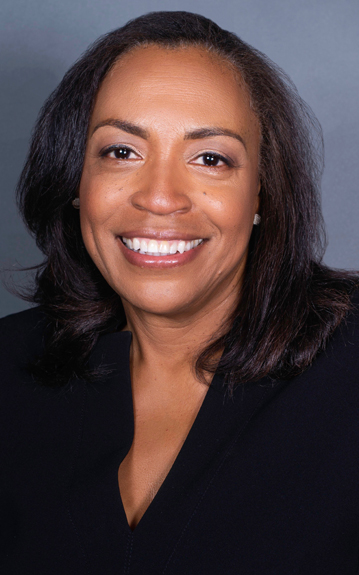

MANAGING PARTNER & EXECUTIVE SALES COACH · CGI Coaching & Training, LLC · USA
Meet Cherilynn Castleman
A former Fortune 500 sales executive, Cherilynn coaches Harvard Business School MBA students and teaches at the Harvard Division of Continuing Education. She also works with revenue teams at Salesforce, Amazon, LinkedIn and Experian, helping them navigate selling in the age of AI without losing the human relationships at the centre of great sales.
“Sales is a gateway skill, and AI is a gateway technology. If you combine AI and sales, you can open any door so that you can sit at the table of your dreams.”
Founder tech stack
What Cherilynn runs on — and keeps human
Cherilynn uses AI throughout her work, but she keeps the final judgement firmly human — especially when it comes to facts, voice and people.
Facts: I verify every number. AI invents plausible figures, and plausible is the dangerous part.
Voice: I read it aloud, standing up. If I would not say it in a meeting, it does not publish.
People: Anything a person will feel, I write. AI does not speak for me to someone who trusts me.
The wrap: AI writes the fast first draft. My judgement writes the final one.
AI Power Women Membership
One membership. A growing library of practical AI Assets.
The LinkedIn Operating System is one of the tools already inside. Join the Library for access to the complete collection—and every new AI Asset created from future guest episodes.
Founding rate for the first 100 members · locked in · cancel anytime