From Episode 01 - July 2026
Conversation before creation.
Think clearly. Create deliberately.
Emily built a business with no existing playbook. She shares how a weekly AI co-founder practice helps her think through the decisions only she can make.
Watch the episode
Read the full transcriptLightly edited for clarity · 100-minute conversation
This transcript has been lightly edited for clarity and readability. Watch the video for the complete conversation.
00:00What You’ll Learn From Emily Petroff
Michelle: She built a fashion company by taking the money out of fashion. Then she started charging a membership for it. And this episode is about that contradiction and why 769 women decided it wasn’t one.
Michelle: I want to give you a warm welcome to AI Power Women. This is a show about women who found leverage — the kind that lets one founder do what it usually takes a team, a warehouse, or a whole war chest.
Michelle: My first guest built a movement out of a Facebook post and a bad Montana winter, and she’s now turning it into a national franchise. Emily, welcome.
Emily: Hello. Hello.
Michelle: Wonderful to have you here.
Michelle: I am so excited for this. How’s... what time is it over there? So, I’m in the UK. You’re in where?
Emily: Right now, I’m in Phoenix, Arizona. So, it is about 11:00 a.m.
Michelle: Okay, okay. And so, how’s your morning been so far?
Emily: I have been just like giddy, like waiting to come and talk to you.
01:18Meet Emily Petroff, Founder of Switch Society
Emily: Like school girl giddy energy is what I’m bringing to the table today. None of that.
Michelle: I love that. And I’ve been just as excited from when we had our conversation and decided, you know, we’re going to do this. I could not wait to have you as my first guest on the show. So, yeah — I’ve done a little intro to you, but I would love you to do your own introduction to yourself as well. Just tell us a little bit more about you, about yourself, where you’re based, etc. I know you’re in Phoenix, but that’s not your home, so just tell us a little bit more.
Emily: Yeah, it’s not my home, but it could be soon. So, I’m Emily Petroff and I am the founder and CEO of Switch Society, and we are a membership-based circular wardrobe. It’s a concept that I founded, created, just kept saying yes to all the things, and it kind of evolved. I tell people all the time, it makes sense, and when people hear about it, they’re like, ‘Of course, that’s so cool.’ But prior to doing this, there wasn’t anything like it, and I think it’s just been a really lovely journey. And now we went through the franchise process and we’re expanding in other places. So I’m so excited to be able to talk to you about all of the things that have transpired for us in the last couple of years, and the trajectory that we’re on moving forward. But I’m based out of Billings, Montana in the US. And yeah, what else do you want — where else should we go? Because I can be long-winded and I want to make sure this…
03:04How a Facebook Post Became a Circular Fashion Business
Michelle: No, it’s completely fine, and I want us to just keep it real. So, where I’d love us to start the conversation — so, I love everything you shared and I want to dig into all of those different aspects, but let’s go right back to the beginning. And I don’t mean the polished beginning, I mean like — take me back to the Hilton Hotel. It’s 30 below weather. You throw this event.
Emily: Yeah.
Michelle: And only 20 women show up.
Emily: Yeah.
Michelle: What happened? How did you feel at that moment?
Emily: So, I actually want to go back even just a little bit further than that, because I don’t have experience in — like, people always say, ‘Oh, so you have a retail background,’ when they learn about what it is that I’m doing. I’m like, ‘Hell no, I don’t have any experience in this space at all.’ I just am one of the women, right? 80% of the American closet hasn’t been worn in the last year, and I fit into that category — I just had too many things in my closet. And yes, you’re absolutely right, I hate winter. I love wine and getting together with women and like-minded energy — I’m a community builder. And so I thought, instead of really complaining about the winter, I’d put something together that allows you to have something to look forward to. And so when I started to think about what this was going to look like, I started to research how clothing exchanges and clothing swaps were being done worldwide — what were people doing, and how did that work, and what were they doing that was successful. And one of the things that came up — for me, I’m a plus-sized woman, and not every one of my friends is my same body shape and size. And one of the things that I had heard or read or seen was that these women were getting together with their friends. So I thought, gosh, I’m not going to be able to just get together with my friends because it’s not going to work if we do it like that, right? So right away I knew that there were some things that were going to be different about what I was doing. So I opened it up to a public space rather than just keeping it within my girlfriends. And so I put an event on Facebook, and within about 10 days of putting the event up, there was so much interest that I was like, I’m never going to be able to host this at my house if even a small portion of these women show up. So we ended up renting meeting space at the Hilton. And yes, it was the weekend that it was 30 below zero. But we still had about 20 women participate, and we collected over 817 items that first weekend, which was really fascinating to me. And from the time that I put the event up, I had created a Facebook group for the people that were going to participate, just so they would know how it was going to work, what we were going to do — that kind of thing. And people just kept adding more people to that group. And then after that, a lot of things happened that first weekend that really set the stage for what we do now and a big part of how our model works.
Emily: When the event was over and I had started to research thrifting models — my background is in business coaching, and I had started to look at the ways that consignment works, what works for the consumer, what doesn’t work. I didn’t know what I didn’t know about textile waste and how bad it is for the planet, all the things that were happening with fast fashion. I didn’t have that — I was just like everybody else, I didn’t have that experience or exposure to a lot of those things. And I’m very loud, and I love to use my voice to educate people. So I just started sharing the things that I was learning with these women, so that at least if you were going to continue to make the same decisions in your shopping habits, you were making them from an informed and conscious place rather than an unconscious and uninformed one. So after that first event, the women who didn’t come because it was so damn cold said, ‘Okay, so when are you doing this again?’ And I was like, I guess as long as I’m planning on doing this. So then it was just this process of saying yes to things, and really looking at — I really had a vision for what this could look like based on some of the things that happened that first weekend. So it was really an amazing experience. And now that group, that Facebook group that I started, has like 3,300 women in it now.
07:59The Problem With Fast Fashion
Emily: So, that’s for what this could look like based on some of the things that happened that first weekend. It was really an amazing experience, and now that group, that Facebook group that I started, has like 3,300 women in it.
Michelle: Amazing — grown exponentially since that first 20. So you had 20 women show up, and you said 870 — so almost 40 pieces of clothing each, almost, that they were sharing amongst them — and you said you educated them. So dig into that with me a little bit. You did all this research about fast fashion and what it’s doing to the environment. Can you unpack that a little bit for people who might not know about that?
Emily: Yeah, it takes about 714 gallons of water to make one cotton t-shirt.
Michelle: Are you kidding me?
Emily: We are making two billion pairs of jeans every single year. A garbage truck of clothing is dumped or burned every second. It’s monumental. Some of the largest textile waste dumps — one is in Chile — can be seen from satellite, that’s how large they are. And it’s brand new things, brand new with tags — these are not items that are beyond their life. There’s enough clothing on our planet right now to clothe the next six generations of humans if we stopped producing right now. And that’s probably even an old statistic, because it’s just so massive — it’s almost hard to even picture. It’s just a massive amount of waste. And a lot of the things, especially from America — most of my education and the awareness that I have is from what we’re doing over here in the States. We’re a very consumable society, and I don’t know how that translates to the rest of the world in a lot of ways. But what’s happening is that a lot of these items that we’re discarding — the average American throws away about 81 pounds of clothing every single year. Lots of those items could be reused, or even if there’s a rip, stain, or tear, they could be repaired and still be used for other things. And then those items, if they’re going into a landfill, they’re doing all kinds of damage there. But a lot of the items that are being taken to large donation centers are then being shipped to third-world countries. And in these third-world countries, there’s no regulation on their landfills — they’ve been technically closed since maybe even 20 or 25 years ago, and no one is stopping the dumping that’s happening there. And so there are fires being created. The things from all of the synthetics and the polyesters are seeping into the groundwater — it’s a bad issue. There’s just a lot of things. And the thing that I hate about it so much — like I was telling somebody the other day — it feels like, to me, when we take our things and dump them off at a donation center and we’re not checking what they’re doing with these items, where they’re going — it’s sort of like if I’m driving in my car and I just roll down the window and throw my trash out, and I’m just like, ‘Wait, now it’s not my problem anymore.’ Guys, don’t do that. So I just think our mentality around a lot of that has to shift and change. And Switch doesn’t solve all these problems, but we’re certainly trying to be a part of the solution rather than a part of the problem.
Michelle: Perfect. So connect me through — what is the gap that you’ve actually seen? With Switch Society, you’ve clearly seen a gap somewhere. You’ve done this research, you’ve experienced it firsthand with the women, with the swap. What is the gap — what’s that middle ground that Switch is covering that just isn’t available right now?
Emily: Yeah, so there’s a lot, actually. In regard to the sustainability side of things, there’s so much that is happening in the thrift space right now. I don’t know if you’ve seen this or not, but thrifting has become very trendy — it’s super cool to go and thrift, which I love. I grew up in an environment — my mom, we went to garage sales and thrift stores, and it was fun to go through that discovery phase and try to find something that you really, really like. But it’s also, as a result of the trend, become really expensive too. Items that normally wouldn’t have cost a whole lot secondhand are now — the prices are skyrocketing. And so it’s really impacting a lot of folks — folks who rely on thrifting not as a fun way to add to their wardrobe, but folks who really need that as a means of caring for and supporting their family — they need that economic option, and it’s the only way they can. It’s impacting them in a negative way. And what that has created is an opportunity for fast fashion brands to come in and produce items that cost almost less than a cup of coffee — you can almost buy a shirt, or a pair of pants, or an item of clothing for less than what it costs to buy a cup of coffee. And although that seems like a good solution for some of these folks, what’s happening is that we’re overproducing, back to this whole problem. And now we’re in this consumption pattern, and those items — you’re only getting two or three wears out of them because the construction is so poor, so bad, that they don’t last. Whereas if you had gone and purchased something for a little bit more, the cost per wear is so much greater than when you buy something through one of these fast fashion companies. So it’s just really creating this yucky cycle. And so what Switch allows us to do is meet women exactly where they are — exactly where they are with their budget, exactly where they are with their body, exactly where they are in their lifestyle, no matter what the transition is that they’ve had. And we as women go through a lot of different ones, and I don’t think we even realize — to the level that I now know, just from doing this in the last couple of years — how our clothing supports us in that, and it can be really supportive and really fun and amazing, or it can be a really difficult conversation that happens in your head that you’re maybe only sharing with your closest girlfriends, or maybe not even at all. So there’s a sustainability gap that’s happening — we’re supporting keeping items in circulation for a longer period of time, and then repairing or deconstructing and upcycling pieces that are truly ready to be deconstructed. There’s the social aspect of things too — I think since COVID, a lot of our shopping went online, and now we don’t have that community in a lot of places, and I think we’re really hungry for building community and being able to go and physically touch something. And don’t even get me started on the online shopping piece — how many times is the sizing not correct, or it just doesn’t fit your body the way you thought it was going to, and then you have this whole return process, and it’s a whole thing — or you end up keeping it and it ends up getting thrown away or going to the back of the wardrobe. So Switch supports that. And then it’s also this really — and this is the part that I didn’t know, this is sort of a hidden gem that happens — when we remove the barrier of money, the way that women participate with clothing is very different, even if we’re just talking about a small five or ten dollar purchase. I now get to dress the body that I currently have, instead of — what do they call them — oh, I can’t think of the word this one gal uses in my store.
Michelle: The aspirational pieces? Or the ‘fat clothes’?
Emily: Yes, right — like, ‘I’m keeping these because if I gain an extra 15 pounds, I’ll have this.’ I’m like, no, we’re not doing that anymore — keeping clothes because you’re going to lose that 10 pounds, or that 50. It allows you to really dress the body that you have. And then the other thing that’s so beautiful about it is that there’s this — for a lot of women, we think we can only do certain things, and this isn’t always a conscious thing. It’s often unconscious. Our mom, or our grandma, or a teacher, or whoever the women or people in our lives were that influenced how we should show up — that’s often a program that’s running in the background. And this gives them an opportunity to set that down — is that really serving you? How many times have you said, or heard other women say, ‘Oh my gosh, that’s so cute on you, I could never pull that off’? That’s such a limiting belief, and it doesn’t come from the woman herself — most women didn’t choose that limiting belief themselves. They heard it from somewhere else, whether it was from the culture, the media, or from someone in their own experience growing up. And Switch gives them permission to set that down — to a yes, you absolutely can wear that damn thing. So my rule is always, with no guilt and no risk, if you see something you like, the question you should ask yourself is, would I wear this one time? And if the answer is yes, you absolutely can wear her, and then you can swap her back when you’re done. So it fills this gap — we are consumable, we want — I’m guilty of that too, I love having something new. Retail therapy is not a word for no reason — it makes us feel better to have something new. So it gives them that dopamine hit without the negative consequences financially, emotionally, psychologically, environmentally.
19:54How the Switch Society Membership Works
Michelle: So there’s a lot of different aspects that this model serves for people that I didn’t know was going to happen — it kind of has just evolved.
Emily: It’s evolved to this. Yeah.
Michelle: So give me a working example. Say a girlfriend has told me, ‘You need to check out Switch, you need to come along.’ Where am I going to go, and what am I going to experience when I get there? I don’t know anything other than my girlfriend’s really excited about it and she’s wearing a fabulous new outfit she told me she got from Switch. How did it go, and what happened?
Emily: So currently it’s a hyper-local solution in the community that it’s in — it’s a brick-and-mortar option, so there has to be one in the community that you’re in. So right now, unfortunately, that’s not a possibility for a lot of women, but that’s the goal — that was my vision, that there should be a Switch Society in every community that has a large donation center, so that there’s a more sustainable option, so that there are better choices for us to make. But let’s say you happen to be in a city where there’s one of the stores — there’s a couple of ways you can go in. You can do a guest pass, so you can just try it out, kind of like a sample — you get like 20 points and you can just shop, and you find the things that you maybe never could have.
Michelle: I don’t need to bring money?
Emily: No, just bring yourself. It’s a membership, though, so to continue you’d sign up to be a member. But you can come in and do a guest pass with no obligation, right? We want people to really come in and go through the discovery phase. It’s really hard for a lot of women — it feels weird to not pay for something. But literally, there’s so many items of clothing — I did a TED talk, and one of the things I talked about is that we’re literally throwing these things away like they’re single-use items, like plastic forks and spoons. If that’s the case, why can’t we all just share? So we really do have so much surplus that we can run the model similar to a lot of other places, in that you want to test it out, you want to come in and see what it’s like. So you can come in without having a membership, you can get a little guest pass, you can come and see the things that we have. The thing I always remind people of is that each location will have anywhere from — our sweet spot is like 600 to 800 members, sometimes 1,500 members. When you have that many women participating in a circular model like this, we’re doing inventory every single day, so we’re putting things out in almost every category and almost every size almost every day of the week, because we’re taking in 10,000 items a month. So the amount of circulation that’s happening — on an average busyish day, about 300 items are leaving our store. So we do a lot of circulation, and even if you don’t find something that day, the chances of finding something are pretty high, because there’s a massive amount of things coming in from the women who are participating in the circulation. So that’s one way you can come in. The other way, yes, you can sign up for a membership — you can do it on our website or in store. And then you can either bring your things that you’re ready to swap out, or you can come in and your first shopping experience is always on us, as our gift to you and our way of saying thank you for your support and welcome to the community. Because one of the things that’s frustrating, I think, for a lot of women about the consignment space is you bring your things in, and then they go through it with a fine-tooth comb and reject pieces, and that feels yucky, and then you have to wait to get credit on your account in order to use it, and you end up spending more money, and it’s this yucky cycle. So with us, your first shopping experience is on us — whether you bring things or not on your first visit, you get to take out items, and after that you can go into a little deficit and bring your things whenever you’re ready. We’re really there to support women through their life cycles, through their own patterns — they get to curate the experience to fit their own shopping behaviors, whatever that looks like for them. We meet you where you are.
Michelle: I love that. There’s so many little threads — I want to go down this way, I want to go down that way, there’s so many questions I still got. So, one of the things you said is it’s this kind of circular way of shopping. Take me through that a little bit more — what do you mean when you say this circular way of shopping?
Emily: Yeah, so let’s use this pink dress that I have on. I wore it today for this interview and it was super fun — and I’m not giving her up, by the way, because I really like this piece and she’s part of our brand. But let’s say that then I was done with her and ready to give her up and find something new. I bring her in, and then somebody else gets to go and take her for a spin, and they might wear her to a wedding or a speaking event or whatever it might be. And then they can choose whether they want to keep her, or whether they’re like, ‘Okay, that was it, pink isn’t really my color, I’m ready to try something else.’ It’s just this ability for things to continue to get more life, instead of buying a piece to wear to a wedding or a speaking event and then having it hang in the closet for however long. There’s a lot of folks going through transitions with their weight — the GLP-1 experience, or those who’ve had babies, or going through menopause or perimenopause — all of those things make your body change in ways you’re not ready for, and Switch is such a great way to support that journey, no matter where they’re at. Or women who are like, ‘I’m done with this job, I got a new job,’ or I’m doing this new thing at my current job and now I need something else. We have a woman — she’s probably in her mid-30s — who has been through two different bouts of cancer, and her skin was so sensitive that she had to change all the things that her body felt good wearing. We don’t even think about how that impacts somebody going through something like that, and you don’t have the budget to go buy a whole bunch of new things, or why make your family spend money. When all of those things are sitting in closets not being worn, why shouldn’t she have access, right? It’s about access versus ownership, that’s what we talk about all the time. And if you find something that you love and want to keep it forever, you absolutely can. We get tired of things and go through this cycle because of consumer behavior patterns, and although that’s not always great in a number of ways, Switch allows you to be okay in that space, and to feel good about what you’re doing in terms of the community and the way it supports you, and the way you support other women. How fun is it to know that if this dress had been hanging in my closet for a year and I brought it in, I might see someone in my community wearing it the next day.
Michelle: Like paying it forward.
Emily: Yeah, exactly — paying it forward, but it works on many levels. You pay it forward and you make another woman feel good, and she gets a fabulous new look.
Michelle: Because that’s a big thing you said before — you get to also support the environment, and then you create a community feel, so you’ve got that social impact happening on multiple layers. So how do you name something like this? What is it?
Emily: Yeah, so we’ve gone through a couple of iterations in the last couple of years of, ‘Yes, what is this?’ Because we’re not retail, we’re not really a thrift store, we’re not really like anything else. So after a lot of research and talking to some advisers, what we feel like we’re creating in terms of a category is a circular wardrobe — a membership-based circular wardrobe is what we are calling it. And that can also evolve, but it feels like that’s really where it positions you.
Michelle: It makes me think of the circular economy, which is all about being more sustainable and products having a different, continuous life cycle. So it puts you in that sphere, where you’re contributing to the circular economy.
Emily: Yes. And I feel like in other places, especially in the UK, you guys do a really good job with circular systems, and so do other parts — Central America does a pretty good job with circular systems too — and the US is not. I feel like we’re on the very front end, and I think we’re going to start to see more models like this in different industries, and we absolutely need that. I was just interviewed on another podcast, and we were talking about how this is coming — it needs to be a part of what we’re doing, because it’s just better for everyone — it’s better for the consumer, it’s better for the operator, and it’s better for the planet. It’s a triple win.
30:55Creating a Category That Didn’t Exist
Michelle: A triple win — I love that. And you said the words, ‘we’re creating a new category.’
Michelle: That must be so exciting, because category creation means you’re the pioneer of something — you’re forging a path ahead of you, it’s a road untraveled, and you’re digging out the name as you go along. It must be such a wild ride, because who do you copy? You become the template, the blueprint, I guess.
Emily: Yeah, it’s equally exciting and terrifying at times, because the filter I’ve had to develop for myself, and the level of trust and intuition, is super high — because a lot of the folks that I would normally call or lean on for support or advice aren’t always giving the best advice for the path that I feel like we’re on. Not that there isn’t a nugget in what they’re saying, but I’ve really had to spend a lot of time being dialed into myself and saying, ‘Nope, that doesn’t feel right.’ I understand that’s a piece of advice you’re giving and you’re a lot smarter than I am, but I just really... I was on a reality TV show early on — that’s a whole other story we might not have time for today — but it was a really valuable experience, and one of the guys who was the owner of the show was talking to a group of us in a little mastermind, and he said, as a founder, you’ve got to be coachable while also stubborn enough that you don’t just go with anyone and everyone’s advice — because even though they may have done something really spectacular, it may not be the thing for you. So there’s this really sweet spot between coachability and being stubborn enough to know what’s going to work for you, and you’ve got to keep charting your own path. I think that was really beautiful advice for me, because that’s been exactly it — I do feel like I’m very coachable and I love to learn from smart people, I don’t want to be the smartest person in the room ever. But also I’m like, ‘Nope, that’s not it, we’ve got to keep moving.’ And that’s been a little difficult, because we haven’t always made all the best decisions, and there are things I look back on and think, well, that was a valuable learning experience.
Michelle: Give me an example — because we always talk about the polished bits, but the middle is messy. Give me an example of one of those times where you thought that wasn’t a good decision, and what did you learn?
Emily: Yeah, I think even just making decisions in the community — we started out at a price point that was really, really low, like $10 a month. And I had gotten advice not to do that, to start out higher. The part for me that was really hard was that I’m not bringing a full product here — I felt like yes, you’ve got to pay something, but because I really had no idea what it was that we were doing, there was an insecurity in my own ability to charge. And now, three years later, we’ve had three price increases, and although a lot of women have stayed with us through that — we’ve retained, I think, 75% of our audience, we have really good retention — there’s also this sense that if I had been a little more confident in what we were doing, I would have started at a higher amount. I can see that looking back now, but I don’t know that there was anything anybody could have said to me at that point — it was just something I had to go through, and I’m also grateful for the experience. So that’s a really good example of something where a lot of people close to me were like, ‘This is way too cheap,’ and I’m like, ‘Yeah, but I don’t really know what we’re doing, so what are they paying for?’ It was this insecurity in myself, and I also had to do a lot of work on being willing to receive — am I in a place of receiving, or am I blocking my own blessings? There’s a whole lot that goes along with that too. There’s a saying — a couple of sayings that converge to the same point — that we’re always clever with hindsight, and you can only ever connect the dots looking back, you can never connect them looking forward, because you can only see just enough in front of you to keep going, even if you have a huge vision of what the end looks like — the journey to the end is not as clear, it’s not a straight line.
Michelle: So you created this community, started out before you even knew what it was — you’ve got this Facebook group of 3,000-plus women now. What’s the next step on the journey for you? What do you see next on your path?
Emily: Yeah, so the other thing that was really transformational for me was — in all the businesses that I’ve owned, they’ve been more like mom-and-pop shop kind of businesses, small businesses that support a local community, or even in my coaching business, where I was working with people from all over the place, but there wasn’t this big vision of going through a typical startup journey.
37:59Raising Capital and Scaling Through Franchising
Emily: Right — like being a founder who then goes through a startup and has this vision of, oh, we might actually need to raise some capital to get to this height. So I ended up joining an investment lab and learning what a capital raise looks like, how you go through that process, how you speak to investors, and what it looks like if we’re going to go big or go home — what does that even mean, what does that look like?
Emily: That was about 18 months ago that I started that journey, and I was in this investment lab with a bunch of other women, and it changed me in ways I can’t even describe — I’m such a better CEO because now I understand what raising capital looks like. And although the raise that we did was fairly small, and it was from our own community, I had never been through that process before, and I never really understood what it looks like to raise, and what that means for my investors. I had also never thought about — this is my baby that I’ve curated and cultivated and grown, and now you want me to talk about exiting it — there was just all this stuff going on inside me about that. And the woman running the investment lab was like, ‘That’s not you — you have to think about what that looks like, because you’re not going to get investors if they think you never want to leave. That’s not necessarily attractive to them — how are they going to get their money back?’ Distributions isn’t always the way. And so I had to really get clear about what an exit strategy looks like for me, what that means for Switch, and how we protect the community while we’re going through this process. That part was really an internal shift for me, in the way I looked at myself, the way I looked at the business, and the decisions I was making to grow and expand it. So we went through the franchise process, and the reason I chose franchising was for two reasons: I feel like this concept is really good, and other people are going to look at it and think, ‘Oh my gosh, that makes a lot of sense, let me go repeat this process.’ So I want to be the first one to the national market — I want to be the category queen — and we need to do that fast. Franchising is one of the fastest ways to grow your footprint, and it takes a lot less capital than if I kept everything under our own corporate umbrella, which would need a lot more capital and a larger team. And I’m a relationship builder — I was a coach — so spending time pouring into women who really believe in what we’re doing, and supporting them in creating a legacy for their family, and being part of this bigger movement — we call it the free fashion revolution — really spoke to me. So my goal is to take the company public in the next four to seven years, or to prepare for a secondary M&A event or something like that, and then to be able to stay on as CEO for a while and continue to build, and support the people who have supported us along the way, because it’s been a really powerful experience, and I feel like we’re just getting started.
Michelle: I’ve got a question for you — for other women who might be in your position, thinking about an M&A, just exploring that process — they’ve got a business, they’re attached to it, it’s their baby, as you say, and they’ve got to think about what that would look like. What advice would you give them, right at the beginning of thinking about going through that process?
Emily: I think they have to do a lot of soul-searching. I think they have to figure out what the business looks like if you’re not in it — regardless of who owns it, because you could own it and still not be actively involved, there are a lot of different mechanisms. But that part, for me, was really valuable in getting clarity about what my big, hairy, audacious goal was for Switch. It was like, when I took myself out of the business — like having kids, right, those of us who have children, they need you, they need you to grow them, and then they become their own entities, doing all the things, and it’s so rewarding. I love being the parent of adult children, because you get to see them do great things that you’re not responsible for — did I create some of it? Sure. But I’m not a believer that I’m responsible for their success. I know plenty of people who had great parents and didn’t do the thing, and I know plenty of people who had terrible parents and are still amazing humans. So I’m only a portion of that — I’m not going to take credit for how amazing they are. And it’s super cool to watch what they’re doing and the ways you’ve contributed to it. I feel like that’s very similar — what if you weren’t actively involved in this business on a day-to-day basis? What would that look like for you? Separating myself from it was almost like my identity was wrapped up in it. I had to separate that and really look at what’s important to me. And I think the other thing we sometimes get caught up in as women is not thinking about what if it wasn’t your choice — what if you get sick, what if you have a car accident, what if something else happens that you didn’t plan for, and you don’t have something in place that allows this thing you poured your life into to keep going. Having those real, honest conversations with myself was such a great exercise in deciding, let’s grow this. And also, this doesn’t have to be the end-all-be-all for me — there are probably other things I’m going to want to participate in and do as I grow and learn. I love mentoring, I love giving back to other women, and being part of the franchise space — just in the last year, I’ve noticed it’s dominated by men.
Michelle: I agree.
Emily: I love that there’s a part of me that can see myself creating a space for women to have more access — I’ve interviewed probably 40 or 50 franchise development companies, and they’re all men, a very small percentage of women in that space that I’ve come into contact with. We need to continue to improve that, and I think that’s a conversation as a whole — we need more women in positions that open doors for other women and help them be heard and seen.
Michelle: I love that — that whole sisterhood you’re talking about, we need more of that. We really do. I always have this analogy: first you fix your own crown, and then you turn around and help the other lady behind you fix hers. I don’t know whose quote that is, but I love it. When you operate like that, you start to think from a place of abundance rather than lack, and it opens your mind up to so many new possibilities. So, as someone doing something very pioneering and creating a category, walk me through that process — more from a mindset point of view, the thinking that goes into it. I know it evolved, you didn’t know straight away, but as you started to realize you were carving out a path, what came into play for you?
Emily: I think the biggest overarching piece is that I had to grow my capacity to hold space for that — it’s a big deal. And I don’t really love the ‘fake it till you make it’ kind of thing, but in some ways it was like, I have to believe it before other people are going to. So a lot of it goes back to mindset — really making that shift inside of myself, doing the work around creating that shift, saying, yeah, we’re doing this. I think that’s the first thing — we have to be in alignment with that, because you could have all the other things in place, and if you’re not aligned energetically, it’s not going to show up. So I always come from, what do I need to do for myself inside first, before I get these external results? That’s the first thing. And then the second thing I’ve done is I’ve read or listened to pretty much every book I could find on category creation.
43:00Building a Business That Can Grow Beyond the Founder
Michelle: Who else has done that?
Emily: No — the other thing that validated what we were doing was that every time I listened to a podcast or a book, or heard from someone who’s walked this path, it was like, ‘Holy cow, that is what we were doing, we’ve already done that.’ It was just this really big deep-well moment — like, okay, this is big. So I think it was just, what can I model that I never thought of, or didn’t know I should be doing, or could be doing? And then putting those things into my playbook — what are the things I need to be doing day to day, what’s the language I need to be using that shapes things, and not allowing our members, our staff, or people interviewing me, to box us into something the brain wants to go to because it’s familiar. We get compared a lot to other types of businesses — people are trying to pigeonhole you into a family, so really holding that container and using that same language, and not disagreeing with them per se, because I’m not trying to create opposition, I’m just trying to expand their thinking. So it’s like, yes, it is a little bit like that, and this, and this — just giving life to that space. And there’s so many things I still don’t know, even now — I don’t honestly know at what point you’ve ‘done it.’ I don’t know what the threshold is. I don’t know if in 10 years I’ll still be saying we did this thing — at what point does the rest of the world recognize this as a category? I don’t really know. I think we fall more in the circular economy, but there’s so many things about the membership economy too — we’re in that as well. There are all these little things that come together, so it’s an evolving definition of what we will become, but right now we’re calling it the circular wardrobe.
Michelle: Okay, so how does the circular wardrobe run — you’ve got this process, you’re getting 10,000 items coming in a month, so many moving parts. What runs underneath to keep it all going? Do you have warehouses, do you have tech?
Emily: Yeah, so — I’m a fifth-generation entrepreneur, and I was raised by people who are just a ‘get it done’ kind of animal, right, we just do it, and it seems very easy and natural, and other people are like, ‘You did what?’ So it’s very messy, right, but it’s cleaner now. It’s so funny, I just hired somebody a couple of months ago and she runs a good chunk of our busiest days in the store, and the things she doesn’t have to go through now — I’m just telling her, ‘Oh my gosh, you don’t have to do this and this, this is the way it used to be,’ and she’s like, ‘What?’ It’s just so funny how, in this space, we’re iterating and pivoting so fast over the last three years, there are massive changes that happen. But in the last six months, we have — and this is the thing I’m really excited about, probably more than most things we’re talking about —
54:12Building Business Technology Without a Tech Team
Emily: AI has allowed us to change the trajectory of technology and the way it supports us. When we were creating this category, and didn’t know all the things we didn’t know, our tech stack was just a nightmare — this system didn’t talk to that system, and it was duct-taped together with Google Sheets and all these different things, and we didn’t have the budget to hire a developer to create a custom software solution for us. I love technology, but I didn’t have the skill set to do all of those things. So the thing we’ve done now is — I found this group and learned what vibe coding was, and how I could go through the process and create technology that would support what we’re doing.
Emily: It was such a gift to me — for so long, over three years, I’d been frustrated, trying to find — I’d spoken to developers, I hired a college student, and I’ve had multiple people I’ve worked with, and it just fell flat, they dropped the ball — all of these things. I kept thinking, why can’t I figure this out? It was because I was supposed to build it — it wasn’t supposed to be an out-of-the-box solution, it wasn’t supposed to be created by someone else. What we have now is so freaking good [unclear: review] — it is so good. It would have never been this if somebody else besides me had built it, and I just love that. It allowed the creative part of me to be combined with the love of technology, knowing technology can do some amazing things. But without that process, we were losing a lot of money — I knew that, but I didn’t really know it, because we didn’t have a system that could track it the way we needed to. In just the last three months, I’ve found thousands of dollars a month from building this system that’s now back in our pocket, generating revenue for us again. There’s been some really great accountability for me, and for my team — I was asking them to do things they have no business doing, they’re not good at it, and now the technology does that for them, so they can do the things they’re really good at. We deliberately built it so it supports the human part of our business, not taking over any of that. And yes, we have a warehouse — and it’s not really a warehouse, I have to tell you this funny story, because this is the real of the real. Growing up, my mom owned a dog boarding and training facility, out on their property a little ways out of town, and on their property there’s this big 5,000-plus-square-foot building — it has dog kennels in part of it. There was a lot of empty space, and when we started, in 2023, the space we had for Switch was only about 1,500 square feet. We were taking in a lot of things and had nowhere for them to go, so I asked her, ‘Can I bring some bags out, just as holding space?’ We have bags upon bags upon bags of clothing in that space now — inside bigger bags, inside even bigger bags. It’s just so funny — she’s semi-retired now, so the building was pretty much empty.
Michelle: So is it a warehouse? Yes. But is it full of dog kennels that now have bags in them? Yes. That’s brilliant.
Emily: It’s a funny thing — and also I’m so grateful, because I bootstrapped this whole thing, so I didn’t have the capital to go get a 5,000-square-foot building. All these little pieces have just come together to let us test and measure and iterate and throw some stuff against the wall to see what sticks over the last couple of years, so it’s been a really interesting journey. But the big, big, big transformation for us is in the way in which the technology I built supports our whole business — from the back end, all the systems we use when members bring their bags in and we do the inventory, to the front end, the user interface, the way the member dashboard works and how they see things. We launched in February, so it’s not even been that long, but it’s been stable for several months now, and we’re adding really fun new features — we get such great feedback from our members, like, ‘Oh my gosh, I just saw this new thing and I love it.’ The other thing the technology has allowed me to do is get back to — instead of worrying about, I knew we were losing money, I knew there was this leaky hole, and plugging the hole — now I can do the things I’m really good at. I can spend time with prospective franchisees, I can look at what it looks like to grow, because it would have been a nightmare to try and grow the franchise system without this. It’s a huge shift for us, and the way it’ll support all the future stores and those members is a game changer completely.
Michelle: So it sounds like it’s given you leverage.
1:01:17How AI Created Leverage and Plugged Revenue Leaks
Michelle: Yeah, it sounds like it organized things, and helped you identify where the leaks were even coming from in the first place. I love these sorts of stories, sorry, I’ve got a cough coming, excuse me. I love these stories because technology really can give women in business — my favorite word, I’ve said this to you off camera — asymmetrical leverage. It’s like an unfair advantage, where you would have needed all these resources to hire a team, and now, because you’ve got an operating system running underneath your business, it allows you to scale in a much more efficient way. I love all of the ROI you’re seeing from it, and how it’s stabilizing the economics of your business as well. So amazing — and you built all of this yourself?
Emily: Yep, that’s the incredible bit — every piece. Well, not myself, but with the support of AI, and it’s just been — I have a talk I do now called ‘AI Is Your Co-Founder,’ because literally it feels that way to me. It’s emotional, as much as people have some judgment around AI sometimes, whatever. When I built the technology, it wasn’t — wow, this is even hard to verbalize — it wasn’t just like one plus one equals two, this and that. It was like I spent — I can’t even tell you how many times, 10 hours, 15 hours — extracting what’s in me: the way that I think, the way I naturally show up for our members, the way I serve them, the way I want us to hold space for them as they’re navigating cancer, as they’re navigating a death in their life, as they’re navigating all of the things our community is about. I spent several sessions extracting all of this out of me and getting it into the system.
Michelle: The technology is so — how did you, when you say you spent hours extracting, paint more of a picture of that. What does that mean, what does that look like?
1:03:38Turning Founder Judgement Into Reusable Systems
Emily: Yeah, so it’s like having a conversation with it — ChatGPT [unclear: review] was my co-founder. Like if you and I just sat down and you were to say to me, tell me, how do you serve your people, how do you write, how do you do this — I would spend hours just talking through it, and having it ask me questions: what would I do in this situation, how would I say this, what would it be, what does the process look like for this and this? And the beautiful thing is, not only did that support the infrastructure of the technology and what our culture is built on, but we were also able to — I have SOPs, I have documentation now, hours of these other assets — because founder dependency is the biggest problem we have, right, the more that people have to rely on and depend on me.
Michelle: Which is funny, because being raised by two people who were the first ones there and the last ones to leave, that was the value you had, right?
Emily: And I’ve known for a long time, since I was little, that I don’t want to be that. I value and support what they built and the way they did it, but I also want to empower other people to do these things, so that I can be anywhere in the world and run the business, or have somebody else run the business, or whatever that could potentially look like. So there’s no bigger gift than having AI support me with founder dependency — how do I remove myself from these things, how do I not be? That was also a big part of my identity — as a woman, I want to be needed in this, I want to be the one who sold this, I want to be the one who…
Michelle: Right, you’ll suffer with that.
Emily: No, right, you’ve got to change that whole process. So I really have trained it, and it’s definitely been a co-founder, a game changer for me, in the way we have a conversation. I don’t ever have it build anything — sometimes it doesn’t build anything at all, sometimes it’s just me having a conversation with it, and it pulls out of me, and then systematizes, what I didn’t know was actually a system that I’m running. It’s been really amazing to have that experience and use it in that way, and I don’t know that a lot of people do it quite like that.
Michelle: I don’t think a lot of people do, and I love that way — it’s a different and interesting way of doing it. I think, at least in my experience, how people interface with AI tends to be very much like a one-off thing, whereas getting it to interview you is the angle I like. Whereas I find a lot of people approach it like a messy WhatsApp chat back and forth — it’s almost like you’ve hired someone to do a job, and you want it to do this thing, and it’s flying back and forth with these conversations, and it can’t output what you want from it, because there was no organization in your thinking. Whereas you’ve taken that same concept of going back and forth, but given it instructions to draw out of you — that’s the structuring, it’s an extraction through a two-way conversation.
Emily: Through our natural language, through conversation — and I think it even helps me think about how I can be a better leader, how I train my team, better than it was before, because I’m thinking about it differently. I record a lot — I use PLAUD, and I record a lot of my conversations, and after the conversation is over I upload the transcript and say, tell me what I did really well, tell me what was a complete epic failure and I can improve, and what are the patterns that work really well and the patterns that don’t, based on these goals. That also has been huge for me, in terms of the way I speak with a real estate agent when we’re looking at property, and every aspect of my business — you go through this extraction process.
1:09:12Emily’s AI Tech Stack and Seven Custom GPTs
Michelle: So, just for women who are either familiar with AI or not, just to give them a nugget — do you have a tech stack that you use? Because you mentioned Claude — are there any other products you tend to use, your go-to tech stack that suits you and your business?
Emily: Yeah, so I actually have — I’m a big fan of ChatGPT too. And I have a team of seven custom GPTs — not agents, I’m sorry, custom GPTs that I built. They’re like my board, or my team — one of them operates like my chief of staff, I have a meeting with her, her name is Atlas, and Atlas and I have a meeting every single Tuesday at 9:40. I built Atlas because I have shiny object syndrome —
Michelle: You’re not alone, you’re preaching to the converted on that one.
Emily: Easy to get distracted when you don’t have guard rails around what you’re doing and you’re charting your own course — easy to get distracted by something that isn’t important, but yet we all still need to know, what is the big end result here, what is the goal? So I built her as a way to keep me focused and dialed in. In 20 minutes, once a week, we do what we call the CEO reset — I’ll hop on and say, ‘Atlas, it’s Tuesday, it’s July whatever, and we’re doing the CEO reset,’ and she’ll ask me a set of questions, and I go through and answer, and she’s like, ‘Okay, based on that, these are the things, and you don’t do anything else until you do this, this, this, and this.’ And she gives me a lot of pushback, because I’ll say, ‘And this happened last week, and then this happened,’ and she’s like, ‘Nope, we’re not doing that, you’re not doing that.’
Michelle: I love that.
Emily: So yeah, I’ve built seven different ones, and they’re so valuable to me, so helpful, and I use them all in different ways. And then the other cool thing is that I’ll bring them into what we might call a war room — if I have something big, like when I was planning on coming into Phoenix to look at the market. One is a capital strategist, one deals just with the expansion side, one is really amplifying my voice, like me — they all have these different roles, very hairy specific, and then I’ll pull them all into a room together and say, ‘Okay guys, here’s what we’re working on,’ the same way I would if I had a team of other humans — pull them into a boardroom and say, let’s strategize, guys, what are we going to do?
Michelle: Absolutely — for a founder who doesn’t have the budget to have a team of seven other humans, it’s been an absolute game changer, because they’re each thinking about their own thing that they’re trained to keep a focus on.
Emily: Yeah, when we bring them all together and talk about what we’re doing, I get multiple points of view through my own filter and go, ‘Oh gosh, I would have never remembered that, I would have never had that on my radar.’ It has changed my life.
Michelle: I love that — it’s one of the best ways to tackle a problem. You’ve got a problem, or anything you’re trying to vision out, and to have multiple points of view on that same thing gives you a different type of awareness of all the considerations you have before you take the next step forward.
Emily: Yeah, I love that. So that’s what I use ChatGPT for a lot — those custom GPTs. And then I’m using Manus — that was actually a recommendation from, another Justin Burns is in the AI space, I respect him a lot and what he’s doing, and he made some recommendations that his team was using Manus for some different things, so I started to play with it. I’m in — the experience I’ve had so far, we’ve topped up, we’ve had to pay extra to get extra tokens multiple times, that’s how much work it’s doing for us. And I’m now teaching one of our team members, who was in SCORE, actually just recently moved to Argentina — I had her staying on with us virtually, and now I’m having her use Manus to do some things. So it has doubled, or maybe tripled, what our capacity is as a team with a tiny budget. I think you and I had said this — the thing I love about it most is that it levels the playing field. In a world, a sea of these large conglomerates, these big franchise systems — we’re getting there, I’m not quite there yet — but we’re able to compete with them in a way we never would have been able to before. Both because of the way I think, the access to information I have that I didn’t have before, and the strategy we’re deploying, and the sheer magnitude of work that gets done.
1:15:35How AI Can Level the Playing Field for Women Founders
Michelle: The speed, because I think, you know, where AI really holds its own, where it’s so valuable — I mean it’s valuable in all the ways you just described, but when you manage to leverage it to monetize, the speed at which you can move changes your trajectory in a way you wouldn’t have gotten any other way.
Michelle: So, before we wrap up today, because what you’ve given us today — I love your story, it’s amazing what you’re doing, the category creation, the fact that it’s sustainable as well, it’s environmentally friendly, and it’s a movement — it’s more than just a business, it’s something people can get behind, want to support, want to do good. I can just see it growing and growing. And what really moves me is how you’ve leveraged technology to sit underneath it — amazing. What really moves me about it, in AI, women are going to be most impacted by the fact that it has arrived. That’s why I do the show — we need more stories like this so other women can see that we’re in this weird oxymoronic space, where women are going to be negatively impacted at a higher degree — administrators, financial people, middle management — that’s going to be highly impacted by the arrival of AI. It’s here, however —
Emily: On the pro side, I think two things — it’s like the yin and yang of something, where if something can be terrible, it has to have its equal and opposite. And its equal opposite is — whilst that is definitely true over there, and we’re not going to shrink it or pretend it’s not happening, it is happening, it is true — but on the other side, if you take the time to just learn about AI, and the learning of it meaning it’s practical, it’s hands-on—
Michelle: Isn’t it — that’s why I love it, because it allows you to get really creative.
Emily: But if you get over your initial fear and start to learn how to use AI, it can leverage you in ways — and a lot of people see young people out there just flying off with it, and yes, it’s for them, but I really think it’s also for women like me who are over 40, who have years of experience and all this domain expertise, and then when you put AI underneath it, it’s like a rocket launcher.
Michelle: Absolutely — bridge, sister, bridge. I absolutely couldn’t agree more. And when you told me you were doing this, I feel like it’s just genius, because yes, we need to not be afraid of what we can do with it, we need to be willing to try the things, to play with it, to actually not just intellectually learn, but experientially learn — what that looks like and what that feels like. And I think you’re giving such a good example with the whole concept of AI Power Women and what it is that we’re doing with the library — it is exactly that experiential learning, the opportunity for somebody to come in, even if they’re unsure, and here’s a step-by-step way, with other women you can trust, who are real, who can say, this is actively how I’m doing it, this is what works for me, and it might help you too. And then you might develop your own way of interacting with it, just because you tried the things we’ve already tried and that we like.
1:19:18Conversations Before Creation: The AI Co-Founder Practice
Michelle: I love it, I love it. What the vision is over here is that I would love to create — for lack of a better word — a library, a resource, and ask guests to leave something behind for the audience, that they could go away and tinker with and try, that’s actively helping you today in your business. What would that be for you? I don’t want to put you too much on the spot, but if you were to — what would be the thing you think gives you the greatest leverage at the moment that would be valuable to share with other women?
Emily: Yeah, it’s teaching them how to have that conversation — I really believe it’s conversations before creation. Allowing yourself to be in a space where you’re a little vulnerable, you’re willing to share some of the themes you maybe haven’t even reflected on before, and let it look at the patterns — maybe you’re a rock star at something you’re not naming, or let it challenge some of your biases, like, ‘You think you’re doing this and this well, but actually it may be a little bit this.’ I always go into it thinking it knows more than I know, having a humble approach, because it has access to things I don’t have access to, that I haven’t experienced, that I haven’t read. So when I come at it from ‘I don’t know all the things,’ it opens me up to getting this feedback, these thoughts, that I wouldn’t have had. So I think teaching women how to have that conversation, and how to teach it to be a co-founder for you — really great co-founders don’t just say yes to you, they challenge you.
Michelle: Yes.
Emily: They say, ‘That doesn’t feel quite right to me, based on the goal we’re after.’ And I think also, just doing enough of your own work, that when it does — one of the biggest challenges with the LLMs is that they’re very supportive, but teaching it, that’s not helping by doing that, that’s not what I’m looking for — and then I think sometimes when it does do that, I push it back and say, no, that’s not what I want, that’s not what we’re doing. So I think just giving them permission to play, and to have that conversation. I’m very rarely going in and telling it to create something without having a conversation around, should I even be creating this first, why are we doing that, what is it for, how is it... And it’s even simple themes — I was working on some sales-related materials the other day, and what if I had just gone in and said, create this, giving it the structure — we would have gotten a pretty good result, because it’s trained pretty well. But because I did the conversation first — oh my god, the piece that we got was so much better. So I think that foundation is such a part of how I interact with it, I can’t encourage people to do that enough.
Michelle: So it sounds like you get it to take you layers into yourself.
Emily: Yes — it’s not doing any thinking for you, it’s pulling it out of you, and getting you to go not just that surface-level idea you had, but let’s see how many layers deeper we go.
Michelle: I love that. And it takes longer, right?
Emily: I get it, it takes longer to do, but I will tell you, the result I get is so much better, and the training that I’m then able to create — for myself, for my team, for our sales process, all the things — it’s massively better because of going through that process and extracting that information. I was thinking about corporations prior to any of this, the AI wave and technology and all of that — I don’t even think CEOs of large corporations go through these processes, sit down with their team and have their team extract this stuff. They’re really good at what they do, they just execute, or the team is creating SOPs based on whatever. It’s a very different approach. And the information you’re extracting is then able to be used in all kinds of ways — you can create systems, you can create documents, there’s a lot that can be done with the information you’re extracting out of yourself, that then mirrors it back to you, and you’re like, ‘Oh my gosh, I didn’t even realize that when I’m coaching someone, I’m doing this.’
Michelle: I love that, because it almost comes full circle to what you said earlier, where you had that really powerful moment of what does it mean for me not to be in the business — and this seems like a way that you extract you, and everything that made you build this business, and turn it into things that support the business, and allow the business to grow beyond you, but still always have a piece of you in it, if that makes sense.
Emily: Yes, absolutely — absolutely. I know we’re trying to wrap up, I just had to tell you a little story real quick. I run this mastermind with a group of women — once a month we meet, and I was working on teaching them some of these things, and I had them go through this process I have, about having it find your blind spots before you create your custom GPTs.
1:25:32Finding Blind Spots Before Building Custom GPTs
Emily: So that was the goal — we were going to create some of these custom GPTs, because I wanted them to have the same experience I was having with mine. And one of the processes I went through was to ask it to show me my blind spots, and go through this whole prompt for them to give it to. And when we got together to share it, before we started creating the custom GPTs, these women were like, ‘I really didn’t want to hear that, but it was really valid — how did it know?’
Emily: And not in a weird, icky kind of way, but in a deep, ‘these are your patterns’ kind of way — you didn’t know that this is what you’re doing, that’s causing some of the problems you’re having, and we now need to build something on your team that’s helping support you in that, letting you go a different way. So it’s a really valuable process to go through when you’re creating, if that’s something you want to do. You can’t just create based on, here’s the result I want — it needs to know where you normally try to dodge, and it was just really funny to watch their reaction.
Michelle: And how was it — was it accurate?
Emily: There was very, very little that it wasn’t accurate on — as long as they had been using it enough for it to give them that, then they get actually really amazing feedback.
Michelle: It sounds like you get it to hold a mirror up to you.
Emily: Absolutely — and it’s uncomfortable as hell if you’re not ready.
Michelle: I’ve got to try it, I’ve got to try it. Fun. Do you hold this workshop regularly — is it something you’ve got coming up?
Emily: It’s not really a workshop, it’s just a group of women that we really believe in supporting each other. It actually came from the reality TV show I was on — the owner of the show had said, when you go back into your local community, and I’m a big community builder, I’ve said that’s the thing I love to do, you need to be with a group of your peers on a regular and consistent basis — not yes-men, but people you can be vulnerable with, who you can say, ‘This last month was really hard and it went hard,’ or who you can celebrate with, and who aren’t going to be intimidated by or threatened by your success. You need a group that celebrates your successes and cries with you and tells you when you’re going wrong. And so I came back from that experience, and I’ve been running that group for three years now, and it’s evolved some — we’re really selective with how we bring people in. So I would highly recommend, if you don’t have a group like that, you find one or create one, because it’s super valuable, and it’s a place where you get to be you. Networking — some of these networking groups I love, I’m a networker, I like going to networking groups, but sometimes in the networking space you’re not sharing all the ins and outs of what just happened in the last month or two. These people are just people who are there to celebrate and to cry with you. So we meet now once a month — we were meeting in person for a while, and now a couple of us are doing other things, so now we’re meeting virtually.
Michelle: I love that — I really do. I’m in a group like that too, we actually meet twice a week, virtually, every Monday and Thursday, and it keeps me so level. And it’s also — sometimes in your immediate environment, your friends, family, and all of that, when you’re ascending to different levels, there are levels for thinking, and you have to be around people. You’d never want to be the smartest person in the room. I’ve got an income goal I want to hit, I want someone at that income goal, or above it, and kind of want to be in proximity to that — people who, if I’ve got a limiting belief about something, can help me break through those ceilings. I want to put myself in places where I’m a bit nervous to be around that person, because they’re on another level to me — that’s how you get to the next level, you’ve got to get comfortable with the thing that you’re uncomfortable with right now.
1:30:32Emily’s Advice for Women Building Businesses
Michelle: So I love all you stand for, I love all that you’re doing, the direction you’re going in, the way you use AI, the nuggets you’ve given today — it’s all been brilliant. So just as a final thought, if you were to go back and speak to your younger self, and give her some advice knowing all you know now, what would you go back and tell her, young Emily?
Emily: So, I think there are different points — when we say younger, we could be talking about my younger self last year, or my much younger self, so I think there are different things I’d tell her depending on the age. But I think we race so hard, right, especially here in the US there’s all this programming around hustle, hustle, hustle. I could have never started this business until the exact moment that I did, three years ago. I know that I know that I know, because even to this day there are things that happen where I think, oh my gosh, that experience I’m now using is from this, or this person I met, or this. So I think the biggest piece of advice I’d give her is: live, babe. Just live your life, just go do the damn thing, whatever the damn thing is, and know and trust that you’re on the path you’re supposed to be on. Stop second-guessing whether you made the right decision, or whether this is going to happen fast enough, or this or that. I think we as women spend a lot of time in our heads about getting to the thing, and did we make a mistake when we did X, Y, and Z. And I know that I know that I know that I’m in the right place, and I needed every single one of the experiences I’ve had — good, bad, and indifferent — from a little teeny tiny girl, all the way up to things I experienced even six to eight months before starting this business. So I think sometimes we get into our 40s and it’s interesting — on one side we don’t care, the guardrails kind of go out the window, and on the other hand we think, ‘Oh my gosh, am I past my prime?’ It’s this weird thing. You’re exactly where you’re supposed to be, babe, and it’s never too late to start — you can always reinvent yourself. That’s another talk I’m passionate about, speaking life into women about reinventing yourself — I’m constantly reinventing myself. It’s never too late, you can decide whatever the hell you want to do, just go do the damn thing.
Michelle: I love that. And also Switch Society plays into that — if you’re going through a reinvention, what better place to go through it than where your wardrobe and how you look and feel plays a huge part. You could be like, ‘I need to be a new person,’ and — I remember this happening to me, I hit my kind of mid-40s and I’m looking at where I am against where I think I should be, these false paradigms of what I’m telling myself I should have accomplished by now. And then I got into this panic of, oh my god, the next milestone is coming up, and I want to start. And then you get to a place where you’re like, yeah, I don’t care what people think, but you care what you think, and I’m very fearful around the pain of regret — I think regret is worse than doing anything.
Emily: So I also think it’s again that weird new paradigm you enter into, where you have all this maturity, as you said, you no longer give a damn about what anybody else thinks, but then on the flip side you become overly aware of how much time you’ve got left. But I think if women embrace that, and allow it to be, then stop being scared of what to do next and just go do it — let that be a little bit like a carrot and a stick situation. Let the ‘I don’t care’ be your carrot, and let time be your stick, and make stuff happen. In fact, you’ll probably make more stuff happen in a shorter space of time than you did.
Michelle: Absolutely, absolutely. Yes, 1,000%.
Emily: Yeah.
Michelle: We’re here on that. It has been brilliant.
1:35:58Where to Find Emily and Switch Society
Michelle: So, if people want to follow you and know how to find out more about you, check out your website — can you share details of how people can continue to follow your journey?
Emily: Yes, absolutely. So, our website is switchsociety.org. There’s a whole lot on the speaking page about me, and some of the talks I give, and you can find out a lot about our model. The franchise page has a lot about what the franchise looks like, and who we’re looking for. On social media, I’m Emily Petroff — on LinkedIn, just Emily Petroff, I’m very accessible and easy to find on pretty much everything. Switch Society is also on Facebook and Instagram — we have a presence on all the socials, I need to do a better job of getting content on all the places, but you can find me very easily through any of those avenues.
Michelle: Amazing, amazing. Any last things you want to say, anything you particularly want to share?
Emily: Yes — I can’t wait until you continue to build this library, because as you were talking about the idea, I’m like, absolutely, I want to be a member, I want to have access to all the things, because it’s so genius and so brilliant. I want to know what other women are doing and how they’re using it, so I can also access the gifts that they’re — I think the more we share these things with each other, the better we’re all going to be. So I will be your first subscriber.
Michelle: Oh, amazing. And just to contextualize that for everybody, what Emily is talking about is, alongside this podcast we offer a library — a growing library of resources. Our guests will leave behind something, so maybe something she’s spoken about today, she will develop, and it will be available for you to have access to, as well as resources I create and other women share about how they’re leveraging AI, what they’re doing, and how it’s helping them make money and make moves out there. The goal is to help you shortcut the learning experience, get to the same points faster, and use it in your own unique ways, and share with the library as well. So yeah, that’s what we’re talking about, and I’m so excited — this has been the most amazing conversation, I’m buzzing off it, and I’m sure other people listening to your story will want to get involved in the movement, because it is amazing. I can’t wait till you go global and come over here to the UK.
Emily: Wait, wait a minute, I’m waiting to have my shopping experience.
Michelle: But yeah, you’ve been wonderful, Emily — you’re a beautiful, wonderful person, and it’s been my honor and pleasure to interview you today. So thank you for taking the time.
Emily: Thank you for having me — I’m so excited for you too, and I can’t wait for us to have all the AI Power Women here. I’m blessed to be able to be here with you, and I can’t wait to see what you do — you’re always being a pioneer, right, you’re the first, you christened the show, you’ve helped pave the way. So it’s your thing, this is what you did, I love it.
Michelle: I love it, yeah, I love it. It’s been a pleasure, thank you so much, darling.
Emily: Bye-bye.
Michelle: Bye-bye.
The Guest
The founder in the room for Episode 01.
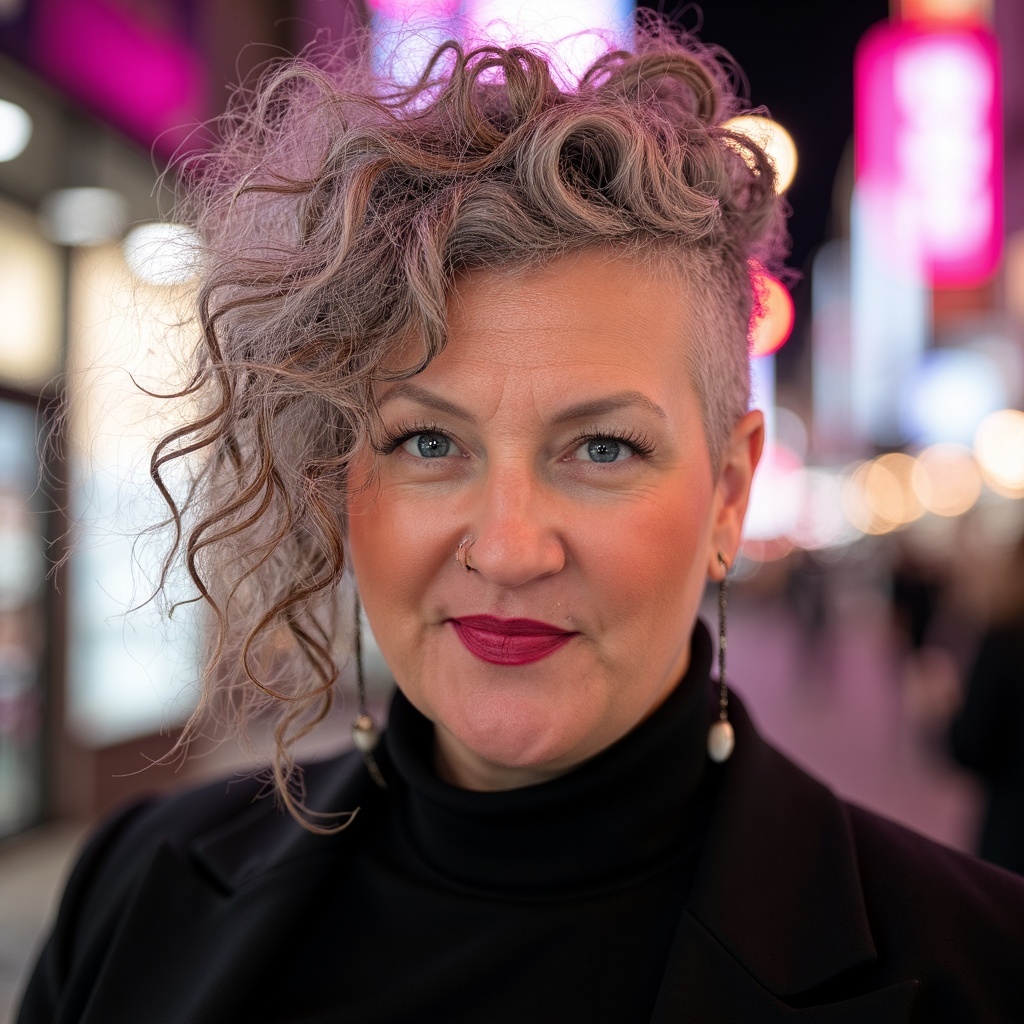

Founder & CEO · TEDx Speaker · Switch Society Inc. · USA
Meet Emily Petroff
Emily Petroff is the founder and CEO of Switch Society, the company pioneering the world's first membership based circular wardrobe.
What began as a simple clothing swap event supporting women who own closets full of clothes they never wear has grown into an entirely new way of thinking about fashion, ownership, and community. Today, Switch Society headquarters in Billings, Montana and serves hundreds of members, processes more than 10,000 garments into circulation every month, and is preparing for national expansion through franchising.
Long before AI entered the picture, Emily was building a business that had no existing playbook. As the company grew, she searched for technology that could support a model unlike anything else on the market. When she couldn't find the right solution, she used AI to build it, creating the operating system that now powers the business behind the scenes.
Before founding Switch Society, Emily spent more than 15 years coaching entrepreneurs and leaders. Today she speaks about entrepreneurship, curating community, category creation, innovation, and the power of asking better questions. Her work challenges conventional thinking and reminds founders that you don't always need a blueprint to build something extraordinary. Sometimes you simply need the courage to begin.
"The future of fashion is not only about what we wear but how we think about clothing."
Founder tech stack
What Emily actually runs on.
Built a 769-member circular-wardrobe community from a Facebook post, now franchising it nationally. Runs her business on a weekly AI co-founder practice.
AI Power Women Membership
One membership. A growing library of practical AI Assets.
Emily's Weekly AI Co-Founder Session is one of the tools already inside. Join the Library for access to the complete collection—and every new AI Asset created from future guest episodes.
Founding rate for the first 100 members · locked in · cancel anytime